19/10/2026 08:50
Ready to Go LIVE? A TikTok Rehearsal Workflow for Cambodian Homeware Shops
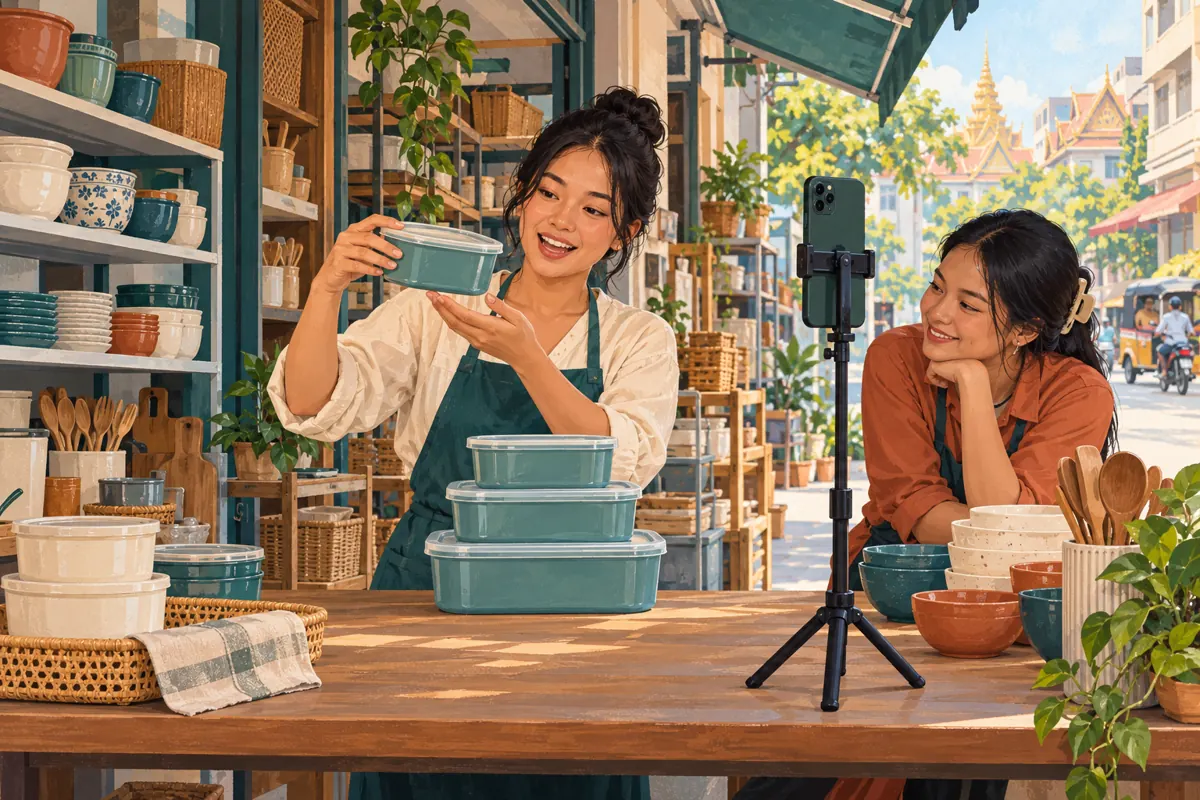
A storage-container lid can look easy to close across a shop counter and become impossible to understand through a phone camera. Hands cover the edge, traffic interrupts the explanation, and the presenter moves to the next item before viewers see what happened. For a Cambodian homeware business preparing a TikTok LIVE, these are useful problems to solve before promoting the session. A rehearsal gives the team something concrete to improve. This guide follows a hypothetical Phnom Penh shop preparing a demonstration of nesting containers. The business, situations and suggested timings are illustrative, not customer results. The workflow also explains how to assess an SMM-panel listing without confusing purchased viewing activity with a successful demonstration or genuine Cambodian demand.
1. Give the rehearsal one question to answer
Start with a practical question: can someone watching on a small phone understand how these containers close and fit together? That question determines the objects, camera position and explanations you need. A broad ambition such as introducing the whole shop makes rehearsal harder to judge because almost any footage can seem acceptable.
Choose one product family and place only the required pieces within reach. For the hypothetical shop, those pieces are three containers and their matching lids. Prepare a short reference sheet containing verified dimensions, what the set includes and any limitations supported by the supplier's documentation. Do not improvise claims about heat resistance, airtightness or food storage suitability from appearance.
Ask a colleague unfamiliar with the demonstration to watch. Their task is to identify moments they cannot follow, rather than compliment the presenter. Define success as an understandable sequence with accurate information and a clear next step.
2. Separate an offline rehearsal from going LIVE
Begin with the phone's ordinary camera recorder. Record the demonstration locally, then review it together. This allows practice without treating a public broadcast as a private testing room. It also avoids assuming that the account has access to a particular rehearsal feature. A local recording checks presentation and equipment; it does not establish that a live connection will be stable.
Before announcing a broadcast, check whether LIVE is available to the actual shop account and review the requirements shown by TikTok. If access is missing, use recorded demonstrations while resolving the account's eligibility through official guidance. A panel listing is not a route around platform requirements.
Commercial disclosure is a separate preparation step. TikTok's official promotion guidance requires disclosure when promoting your own business as well as qualifying third-party commercial content. Its documented LIVE path is Settings, Content disclosure, then Disclose LIVE content. Select the relationship that accurately describes the broadcast before starting.
3. Rehearse in the conditions the shop actually faces
Use the intended counter, phone, stand and lighting. A quiet rehearsal in a back room will miss the motorcycle noise and changing daylight at the storefront. In the hypothetical shop, the team practices near the planned broadcast time to discover whether passing traffic covers the presenter's voice. This is a practical test, not a claim about Cambodian shops generally.
Check the whole working area. The stand should remain steady when a container touches the counter. Route power cables away from movement, keep liquids away from equipment and remove customer paperwork from view. Leave space for the presenter to set lids down without reaching across the camera.
Record while speaking normally, turning toward the products and lifting them. Listen back through an ordinary phone speaker. If words disappear when the presenter looks down, adjust positioning and repeat that passage. An expensive microphone is not the first answer to a problem caused by distance or handling.
4. Make every important movement visible
Frame the action before framing the presenter. Viewers need to see the opening, rim and lid together when the explanation concerns closure. Keep the important detail away from the outer edges of the picture, leaving room for the platform's interface. Check the actual LIVE preview when available instead of assuming that a camera recording exactly matches the broadcast layout.
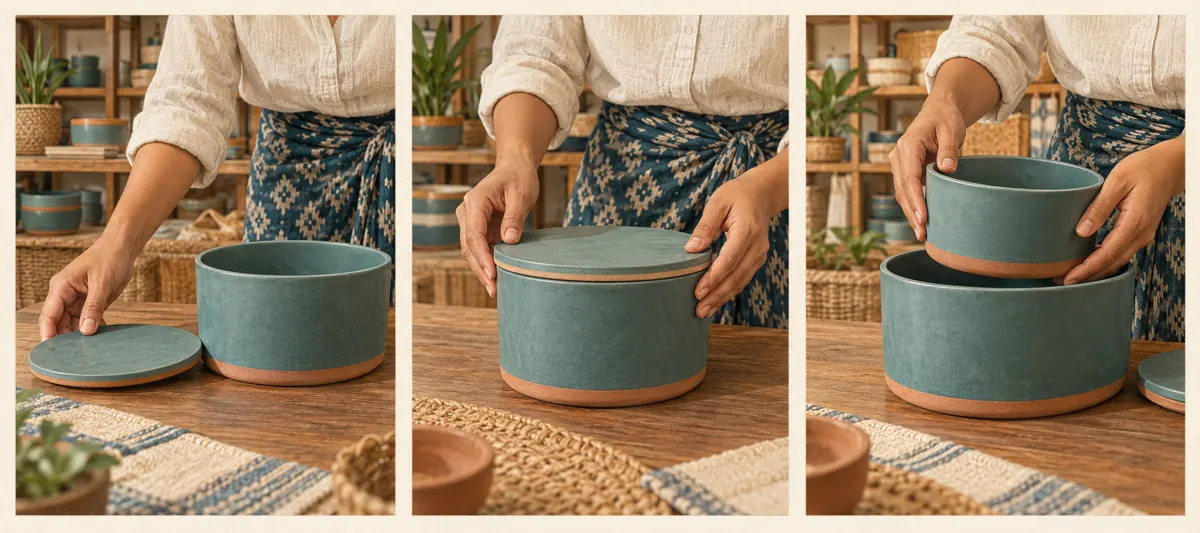
Practice three deliberate actions: identify the matching pieces, close the container, then demonstrate nesting with the lids removed. Pause after each action long enough for the observer to describe what changed. If they cannot tell whether a lid is seated, change the angle or hand position before repeating the explanation.
Avoid moving the object continuously while talking. Set it down, explain one feature, then move it for a stated reason. A plain contrasting surface can make transparent or pale edges easier to distinguish. Review the recording at normal viewing size rather than relying on a large monitor.
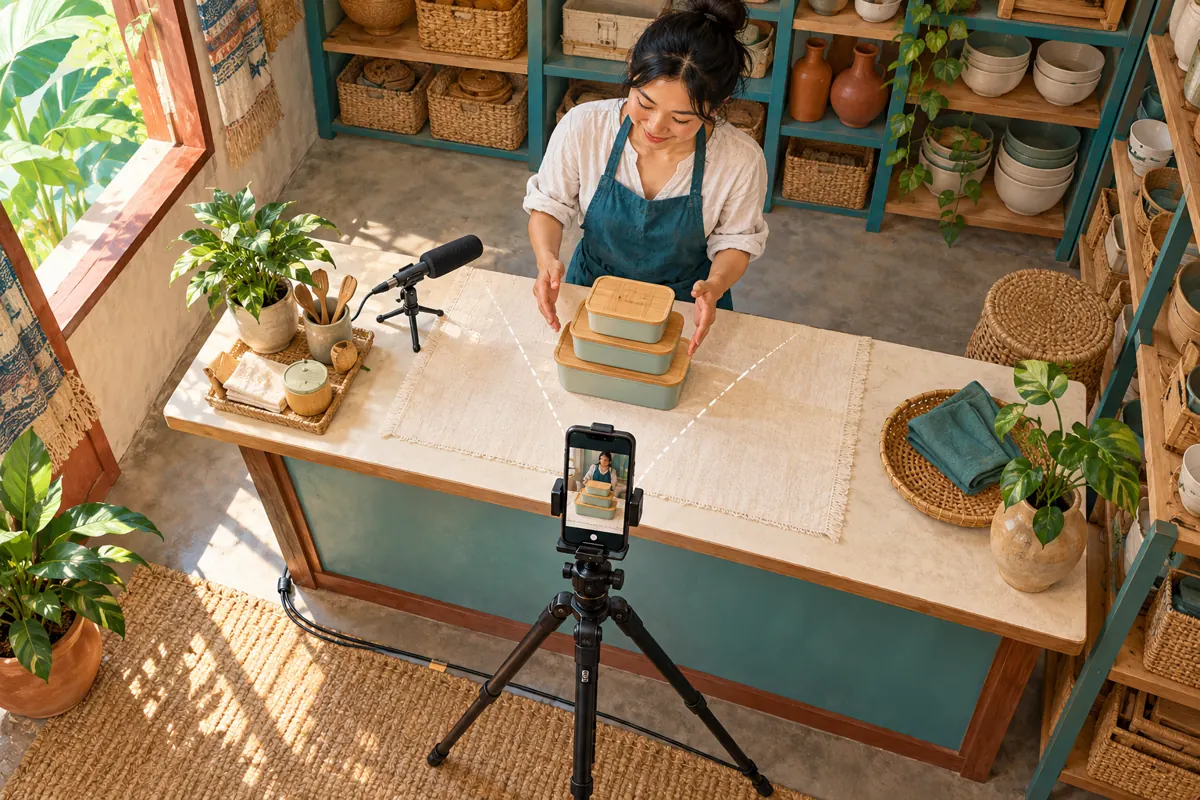
5. Build a short demonstration that survives interruptions
For this hypothetical rehearsal, allow about ten minutes: a brief introduction, the main handling sequence, a comparison between sizes and a closing explanation. This is a suggested practice format, not an ideal duration prescribed by TikTok. Extend it only when the product needs more explanation.
Give each stage a clear purpose. The introduction identifies the set and the question being answered. The handling sequence shows how it works. The comparison explains which differences matter. The closing tells interested viewers how to ask about the exact item and current availability through the shop's established contact route.
Practice a short recap between stages: we have shown the lid fit; next we will show how the empty containers stack. That sentence helps the presenter recover after an interruption. It also supplies context for someone who encounters only part of the demonstration without requiring the entire introduction to be repeated.
6. Test questions and mistakes deliberately
Ask the colleague to interrupt with realistic questions during rehearsal. For example: does the displayed price include every container, and is the larger size available separately? These are invented practice questions, not reported customer enquiries. The presenter should finish any delicate handling step, acknowledge the question and answer only from confirmed information.
Introduce one recoverable mistake, such as placing the wrong lid beside a container. Practice noticing it, correcting it plainly and restarting the relevant action. This teaches a more useful response than pretending that every demonstration will run perfectly. Do not turn the mistake into a false claim about another product.
Also rehearse an uncertain answer. A useful response is that the team will check the product documentation before confirming. Note the question for follow-up. If only one person will run the broadcast, simplify the demonstration so reading questions does not require abandoning unstable objects or leaving the camera unattended.
7. Prepare a stop-and-restart decision
Decide in advance which problems justify continuing, pausing the explanation or ending the broadcast. A brief street noise interruption might require repeating a sentence. Persistent inaudible speech, a product mix-up that changes the offer, or a customer entering the filming area without agreeing to appear may require stopping to resolve the issue.
Rehearse a neutral explanation for viewers: the team needs to fix the sound before continuing. Avoid blaming viewers' connections without evidence. If a session ends unexpectedly, verify the shop's actual situation before promising a restart time. Update any announcement through the same channel used to invite people.
Keep the fallback simple: a recorded demonstration can still explain the product when a live session is impractical. An offline rehearsal cannot certify network performance, and one successful broadcast cannot guarantee the next. Separate equipment observations from connection observations so the team fixes the problem it actually encountered.
8. Understand what the panel listing does not establish
The supplied public catalogue includes the exact service name TikTok Live Stream Views [ 30 Minutes ]. Its title identifies a LIVE-view service with a stated time period, but the supplied description is empty. That leaves no descriptive basis for asserting how delivery works, who watches, whether viewers are Cambodian, or what support conditions apply. The title alone does not establish those details.
TikTok's Integrity and Authenticity guidelines prohibit services that artificially increase engagement and describe enforcement against deceptive activity and inflated signals. If a proposed service relies on artificial engagement, do not proceed. A listing's presence does not establish platform permission or official affiliation.
Purchased engagement is not evidence of genuine interest, sales, ad delivery or Cambodian users. It also cannot show whether viewers understood the demonstration. For this workflow, spend preparation effort on observable problems: hidden product details, uncertain answers and unclear instructions. Those problems remain even when a counter displays more activity.
9. Review the recording with specific observations
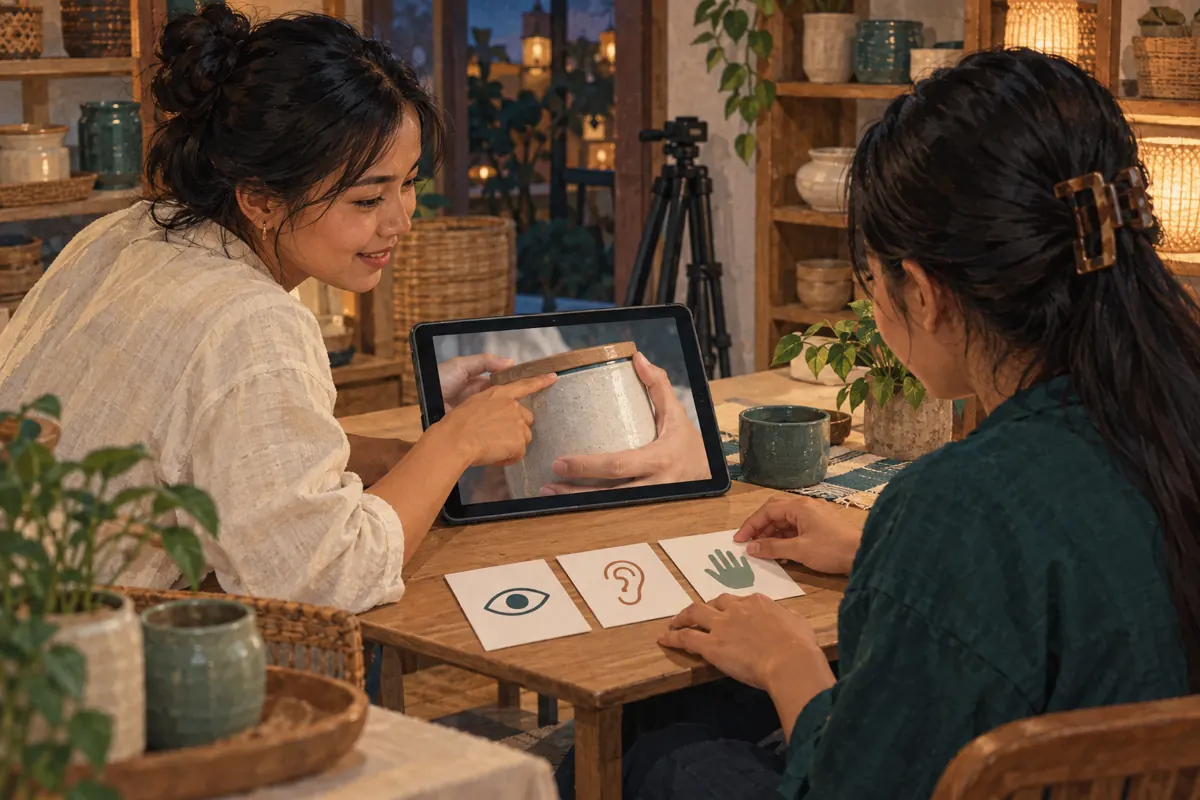
Watch the rehearsal once for picture and once for sound. Then review the sequence as a shopper: what is being demonstrated, what information remains uncertain, and what should an interested person do next? Separate these passes so an attractive picture does not distract from missing words or an unsupported claim.
Write observations with a location in the recording and a proposed correction. In the hypothetical shop, a useful note would be that the presenter's palm covers the rim during closure, so the next attempt should hold the container lower. Another might identify a passing vehicle drowning out the set contents, requiring that sentence to be repeated clearly.
Choose the most consequential corrections and repeat the affected passages. If moving the phone changes both framing and sound, run the complete sequence again. Avoid endless polishing of greetings while the central demonstration remains unclear. Keep the final reference sheet beside the filming position for the actual session.
10. Promote the demonstration only when its promise is clear
An invitation should tell people what they will learn: for example, how the shop's container sizes nest and which lids belong together. Confirm the date, local time and account name before sharing it. Use a real product image or a short approved excerpt that accurately represents the planned demonstration.
Do not announce discounts, stock availability or delivery arrangements that the team has not confirmed. Avoid implying that a large audience has already committed to attend. A useful invitation can stand on the practical value of the demonstration without manufactured popularity.
After the broadcast, record the questions people actually asked and any explanations the team struggled to deliver. Keep confirmed enquiries and completed transactions separate from viewing activity. A quiet session with a clearly demonstrated product still provides material for a better recorded explanation; a busy counter alone does not establish commercial success.
Frequently asked questions
Can I rehearse without starting a TikTok LIVE?
Yes. Use your phone's camera recorder to practice the presentation, then watch the recording. This checks framing, sound and handling without broadcasting. It does not reproduce every TikTok interface element or test live transmission, so account access, preview layout and connection conditions still need separate attention.
What if the shop has only one staff member available?
Reduce the scope to one simple demonstration with objects that can safely rest on the counter. Practice setting the product down before checking questions. Prepare verified information within easy reach. If filming prevents you from serving customers appropriately, choose a quieter period or publish a recorded demonstration instead.
Should the presenter speak Khmer or English?
Use the language the intended customers understand best. For a Khmer-speaking audience, rehearse the explanation in natural Khmer and keep genuine product names consistent. If a second language is needed, practice a concise restatement of the important facts rather than switching unpredictably while demonstrating a complicated action.
Does a thirty-minute LIVE-view listing mean I should broadcast for thirty minutes?
No. A duration in a catalogue title is not editorial guidance and does not establish the service's full conditions. Plan the session around the information viewers need. More importantly, do not use artificial engagement: it conflicts with TikTok's rules and cannot validate product interest, audience location or sales.
How do I know the rehearsal is good enough?
Ask the observer to explain the demonstrated action and identify what the set includes without prompting. Confirm that the key details are visible, the speech is understandable and uncertain claims have been removed. Proceed when those essentials work and the team knows how to handle interruptions, rather than waiting for a flawless performance.
Explore the current service catalogue, create an account, or ask a specific question through support tickets.
- TikTok Support: Promoting a brand, product, or service
- TikTok Community Guidelines: Integrity and Authenticity
Prepared with AI assistance. Illustrations explain the workflow and do not represent customer results.