19/10/2026 22:39
Which Project Should the Workshop Teach? YouTube Polls for Cambodian Craft Shops

A viewer may love a handmade tote bag without wanting to attend a sewing class. Another may prefer a cushion cover but need a different date before booking. For Cambodian craft shops promoting workshops through YouTube, a poll can start a useful conversation, provided the question matches the decision the business needs to make. This guide uses a hypothetical Phnom Penh sewing workshop to explain how to compare beginner projects, review responses and announce a practical next step. It also explains where SMM-panel services do not fit: purchased engagement cannot establish workshop demand, identify Cambodian customers or reserve a place. The aim is to turn a small audience question into a better offer without claiming more than the answers reveal.
1. Decide what the vote will influence
Start with a decision the shop can genuinely change. In the hypothetical workshop, the owner can teach a tote bag, a cushion cover or a drawstring pouch. All three are possible with the available machines and instructor. The unresolved question is which project to prepare first. That is suitable for a preference poll because each answer points toward a manageable action.
Write an internal decision sentence before drafting the post: the responses will help choose the first project to develop into a bookable beginner class. Avoid promising that the most popular answer automatically becomes the next event. Materials, teaching time and enquiries still need checking. If the owner has already committed to teaching tote bags, ask about a real remaining choice, such as which construction step needs the clearest demonstration. A poll should influence something.
2. Check that a YouTube post is the right route
YouTube's Learn about posts guidance explains that posts can appear on a channel and may also appear in viewers' Home or Subscriptions feeds. Distribution is not guaranteed. Posts are unavailable to supervised accounts and channels set as Made for Kids; access can also depend on channel role. Check the shop's actual access before making a poll part of the promotion schedule.
An adult beginner workshop should use accurate audience settings based on its content. Do not change those settings merely to obtain a feature. If posting is unavailable, gather project preferences through ordinary conversations with interested customers and record the method honestly. Even when polls are available, consider whether the channel's viewers are the people you need to hear from. A tutorial audience may include people who enjoy sewing videos but cannot travel to the shop.
3. Offer choices that are genuinely comparable
Choose a single dimension for the question. Comparing projects is different from comparing prices, dates or teaching languages. A choice labelled beginner tote bag and another labelled advanced evening cushion class changes several things at once. You would not know whether respondents preferred the object, the difficulty or the schedule. Keep those conditions consistent, or explain that they remain undecided.
For the hypothetical shop, suitable option labels are simple tote bag, cushion cover and drawstring pouch. Before including them, the instructor should make each sample and check that it fits the proposed beginner format. Remove options that require unavailable equipment or skills the class will not teach. There is no need to fill every available answer slot. A short set of feasible projects produces a clearer decision than a long collection of attractive ideas the shop cannot deliver.
4. Choose text or images according to the uncertainty
YouTube's Create a post instructions support text and image polls, each with up to four options. Text options allow up to 65 characters, while image captions allow up to 36. Use text when the project names are enough to explain the choice. Use images when shape or construction is central to understanding it.
For an image poll, photograph the shop's actual samples against the same background with similar lighting and framing. Do not give one project elaborate styling while showing another as an unfinished scrap. That may measure presentation quality instead of project preference. Use short labels that still distinguish the objects on a phone. For a Khmer-speaking audience, have a fluent reviewer check the wording inside the composer. If the shop also serves English-speaking learners, keep any bilingual wording readable rather than forcing a miniature paragraph into each option.

5. Draft a question that does not imply a reservation
A hypothetical English draft is: Which project would you most like to learn in a beginner sewing workshop at our Phnom Penh shop? We are choosing a project to develop; the date and fee will follow. Voting does not reserve a place. The wording establishes the activity, location and limited purpose without suggesting that a class is already confirmed.
Adapt that meaning into the language the intended learners understand. Avoid asking which project people will buy if you only want to know what they enjoy making. Likewise, favourite item and preferred learning project are different questions: someone may admire a complicated bag but want an easier first lesson. Ask a colleague unfamiliar with the plan to explain what answering means. If they think a vote creates an obligation or secures a seat, revise the question before posting.
6. Publish with a review plan
On a computer, YouTube's documented route is Create, then Create post, followed by the poll format. Enter the question and options, review them and select Post. Before that final action, check that every picture matches its label and that the poll belongs to the correct shop channel.
Choose an internal review date that leaves enough time to prepare materials and answer enquiries. If you tell viewers when you will review responses, include a clear date and Cambodia time. A stated review point is a business decision; do not describe it as an automatic voting closure unless you have actually configured and verified that behaviour. Assign one staff member to record the result at that point and another to check feasibility. This avoids repeatedly changing the plan whenever the leading option changes.
7. Read the result alongside practical questions
At review time, record the exact question, options, visible response total, displayed result and review date. Preserve the context as well as the leading choice. A percentage without its response total can make a small set of answers look more decisive than it is. Describe the outcome as a preference among people who responded, rather than demand across Phnom Penh or Cambodia.
Then examine practical questions separately. In a hypothetical result, the tote bag leads, while several enquiries ask whether machines are supplied. That suggests the next announcement needs a clear equipment explanation. It does not establish how many people will attend. Questions about travel, teaching language, accessibility or class duration can reveal obstacles the poll never measured. Record those themes without treating every comment as a separate customer or assuming every respondent lives near the shop.
8. Apply a feasibility check before opening bookings
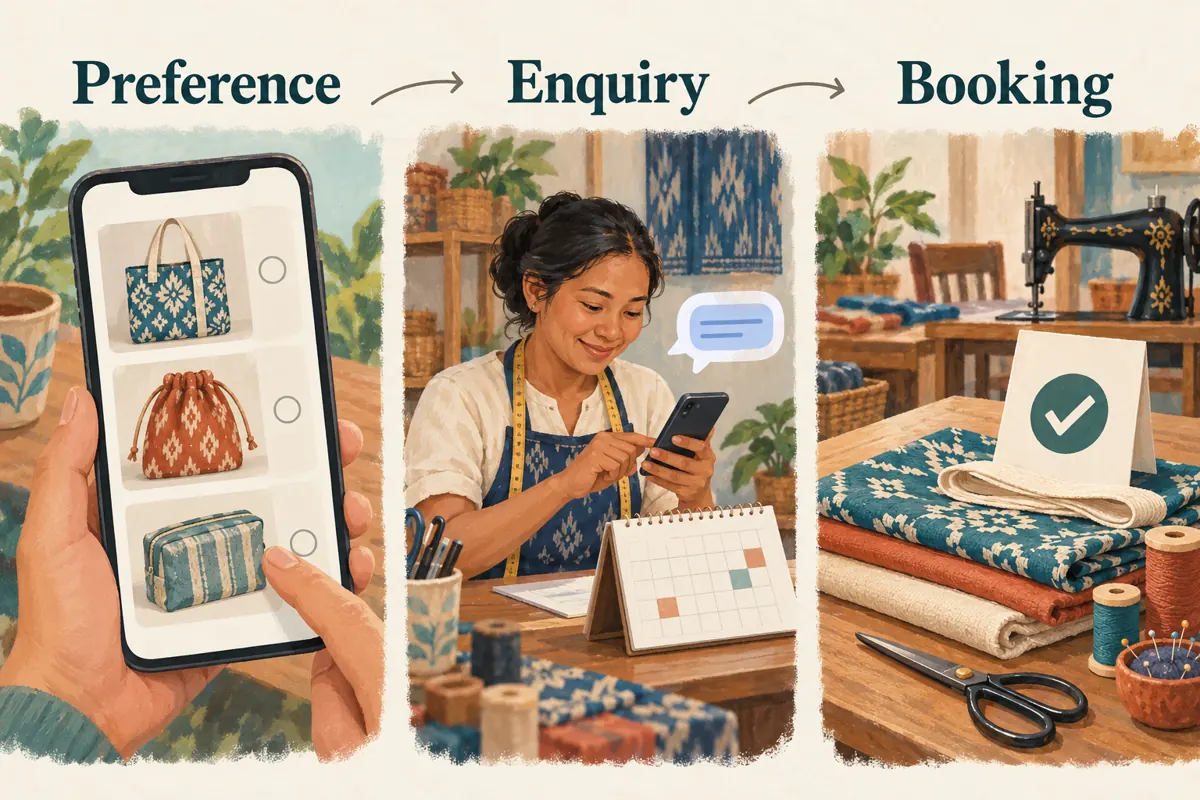
Use a simple decision sequence. First, confirm that the preferred project remains teachable with available materials. Next, prepare the actual location, duration, fee, included supplies and learner requirements. Then invite interested people to enquire through the shop's established contact route. Only confirm attendance through the normal booking process. Each step answers a different question, so keep preference, enquiry and booking records separate.
Suppose, hypothetically, the tote bag leads but the intended fabric is unavailable. The shop could explain the delay, propose a clearly described alternative fabric or postpone the workshop. It should not silently substitute a different project and call it the audience's choice. If responses are sparse or closely divided, use instructor readiness and genuine enquiries to choose a modest next step. Preparing one demonstration or collecting further questions may be more sensible than announcing several classes.
9. Keep SMM-panel metrics outside the demand decision
The supplied santrix-smm.com catalogue includes the exact label YouTube Like ~ Max 5k ~ 5k/days ~ Instant ~ 𝗥𝗘𝗙𝗜𝗟𝗟 30D. Its name identifies a YouTube-like offering; the brief supplies no supporting description. Treat the speed, quantity and refill wording as catalogue claims, not verified performance. Nothing provided establishes support for poll votes, workshop registrations or a Cambodian audience.
YouTube's Fake engagement policy prohibits artificial increases in engagement metrics and warns that a hired promoter's methods can affect the channel. Do not purchase artificial activity to strengthen a poll result or make a workshop appear popular. Purchased engagement is not evidence of genuine interest, sales, ad delivery or Cambodian users. For this workflow, an SMM-panel listing is not a solution to an uncertain project choice. Direct the promotion effort toward clear samples, useful explanations and responses from people who voluntarily express interest.
10. Explain the decision and avoid common polling mistakes
Follow up with what the shop has decided and what remains open. A hypothetical update could explain that the tote bag received the strongest preference among respondents, that materials have now been checked and that confirmed class details are available. If the shop chooses another project for a practical reason, explain that reason plainly. Thank people without presenting their participation as a customer endorsement.
Avoid repeatedly reposting the same question until the preferred option wins. YouTube's Spam policy specifically addresses using repetitive, low-effort polls to manipulate engagement. Other mistakes include changing the meaning of an option during the review, interpreting silence as rejection and claiming a class is nearly full from votes alone. Judge this exercise by whether it helped the shop make a clearer offer. A useful outcome may be discovering that learners need equipment information before they can consider attending.
Frequently asked questions
Does the most popular project have to become the next workshop?
Only make that promise if the shop can honour it. It is usually better to say that responses will guide planning, then consider materials, instructor readiness and practical enquiries. If the final choice differs from the leading response, explain why. That preserves the value of asking without pretending the vote settled every operational detail.
How many votes are enough to make a decision?
There is no universal threshold for this business choice. Consider how costly the next step is and what the responses actually establish. A small response may justify preparing a sample or answering a recurring question. Committing to venue hire or substantial materials requires stronger evidence, including actual booking commitments under clear terms.
Can we ask about the project, date and price in one poll?
That usually makes the result difficult to interpret. A person choosing one combination might prefer its date rather than its project. Start with the uncertainty that prevents the next decision. Once the project is feasible, explain the actual schedule and fee and collect enquiries about that specific offer.
Should we contact everyone who votes as a potential customer?
A vote is not an invitation to receive sales messages. Give interested viewers a clear way to contact the shop voluntarily. Ask only for information needed to discuss attendance, and move personal booking details into the established private process. Do not request phone numbers or payment evidence in public comments.
What if the poll attracts attention but no bookings?
Review the offer before assuming the topic failed. People may enjoy the project but be unable to attend because of location, timing, cost or equipment requirements. Look for questions that clarify those barriers. Do not compensate by buying engagement; larger visible counters cannot resolve an unsuitable schedule or an unclear workshop description.
Explore the current service catalogue, create an account, or ask a specific question through support tickets.
- YouTube Help: Create a post
- YouTube Help: Learn about posts
- YouTube Help: Fake engagement policy
- YouTube Help: Spam policy
Prepared with AI assistance. Illustrations explain the workflow and do not represent customer results.