22/10/2026 02:16
Uploaded Tonight, Ready Tomorrow? YouTube Scheduling for Cambodian Apron Shops

A finished apron demonstration does not necessarily mean a shop is ready to promote it. The sample may be correct while the available colours remain uncertain, or the person who answers sizing questions may already have gone home. For a Cambodian apron business, scheduling a recorded YouTube video can create useful space between finishing the edit and inviting customers to watch. The practical question is whether the product, message and shop team will all be ready at release time. This guide explains how to make that decision, check the scheduled upload and keep any SMM-panel activity separate from evidence of genuine customer demand.
1. Choose a release time the shop can support
Start with the business task the demonstration should help a viewer complete. An apron video might explain neck-strap adjustment, show where the pocket sits or help a café owner decide which measurements to request. Choose one main question. A video intended to answer a fitting question needs a release plan that includes someone who understands the garment, not simply someone available to share its link.
In a hypothetical Phnom Penh apron shop, the owner finishes editing on Tuesday evening but wants enquiries handled on Wednesday morning. The appropriate release window is after the team has checked the samples and prepared its answers. This is an operational choice, not a claim about the best posting time in Cambodia. If mornings are already occupied by packing wholesale orders, a later staffed window may be more sensible.
2. Separate uploading, scheduling and public availability
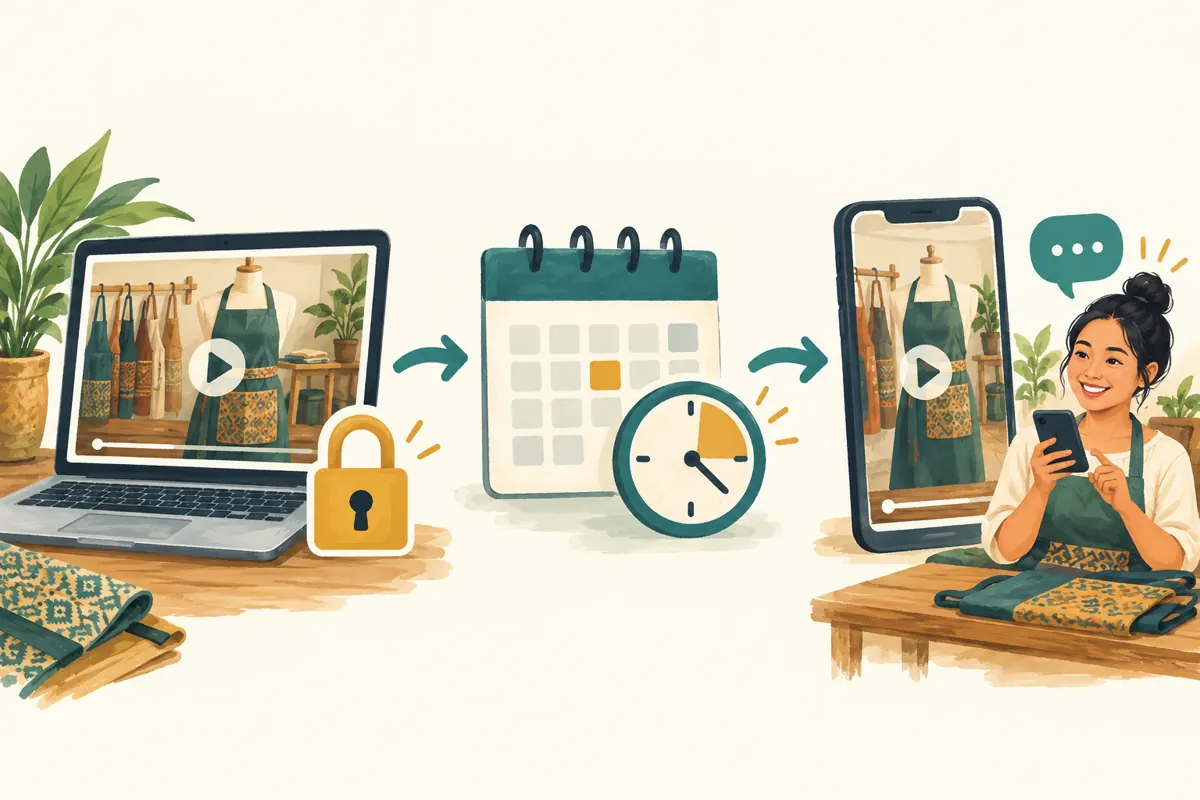
YouTube distinguishes uploading a file from publishing it for people to watch. Its scheduled publishing feature lets a private video become public at a specified time. Treat these as separate milestones in the shop's working notes: the file is uploaded, a release is scheduled, and public access has been checked. Completing the first milestone does not establish the third.
Use plain status labels that a colleague can understand without opening an editing project. For example, write “uploaded; product review pending” while the owner checks the garment, then record the intended release after approval. Avoid “done” until you explain what is done. This matters when another worker prepares a Telegram announcement or answers a customer who expects the demonstration to be available. Keep that announcement ready, but release it after verifying the public video.
3. Review the apron against the finished video
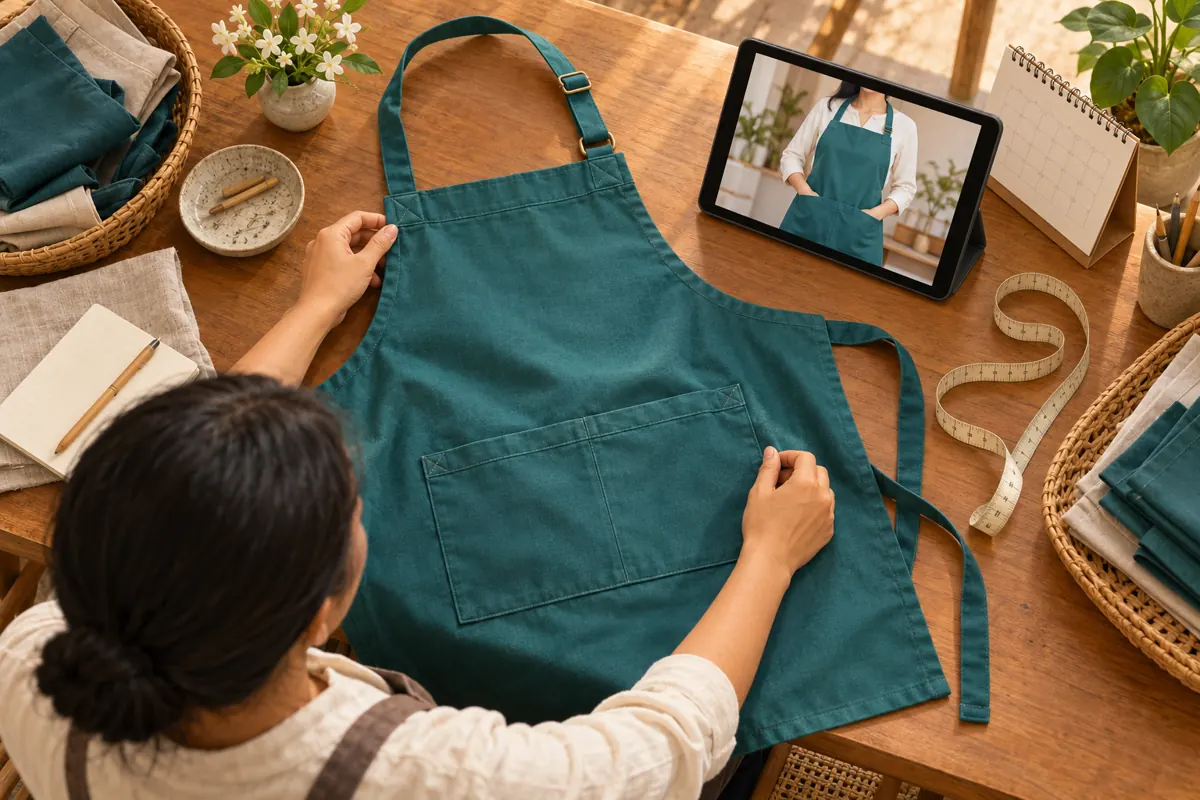
Put the actual sample beside the finished edit. Confirm that the shown pocket arrangement, fastening and fabric correspond to the item being discussed. Check whether a hand or camera angle hides the part that makes the explanation useful. If the demonstration shows an adjustable strap, viewers should be able to follow the adjustment and see its final position without guessing what happened outside the frame.
Then review every promise that could expire before publication. “Available tomorrow” becomes confusing when the release moves. “This colour is ready for collection” needs a stock check close to publication. Prefer stable explanations in the recorded narration, and keep changing availability information in clearly dated accompanying copy. For Cambodian customers comparing local collection with provincial delivery, distinguish those arrangements explicitly. A ready sample does not establish that a complete order is ready to dispatch.
4. Set the schedule and make the time zone explicit
In YouTube Studio, upload the selected file and complete its details. Choose Schedule, set the date, time and time zone, then confirm Schedule. Write the intended local release in the shop's plan using a full date and an unambiguous time, such as “Wednesday, 18 November 2026, 09:00 Cambodia time.” Check that the selected zone matches that intention.
YouTube says the date beneath a public video uses Pacific Standard Time, so it can differ from the date shown in Studio. Do not use the displayed date alone to diagnose a scheduling error. Compare the saved schedule with actual public access. YouTube also notes that a Community Guidelines strike can prevent scheduled publication during the penalty period; the video then needs rescheduling when that period ends. These platform conditions belong in the release check, rather than being treated as proof that someone forgot to publish.
5. Give the schedule a final business readiness check
A saved release time should trigger a review appointment in the team's own work plan. The reviewer checks three things: whether the video remains accurate, whether the advertised next step is possible, and whether a named person can handle questions. This review is especially useful when the editor and the person managing stock are different people. Neither should have to infer the other's approval from silence.
For a hypothetical Siem Reap apron supplier, the demonstration may remain accurate even if a particular colour is delayed. The owner could remove the immediate-availability promise and publish an educational fitting guide, provided the resulting message is clear throughout. If the video itself repeatedly promises collection of that colour, postponement is cleaner. Decide based on what the viewer will reasonably understand, rather than how much time the team has already spent preparing the announcement.
6. Prepare the enquiry route before sharing the release
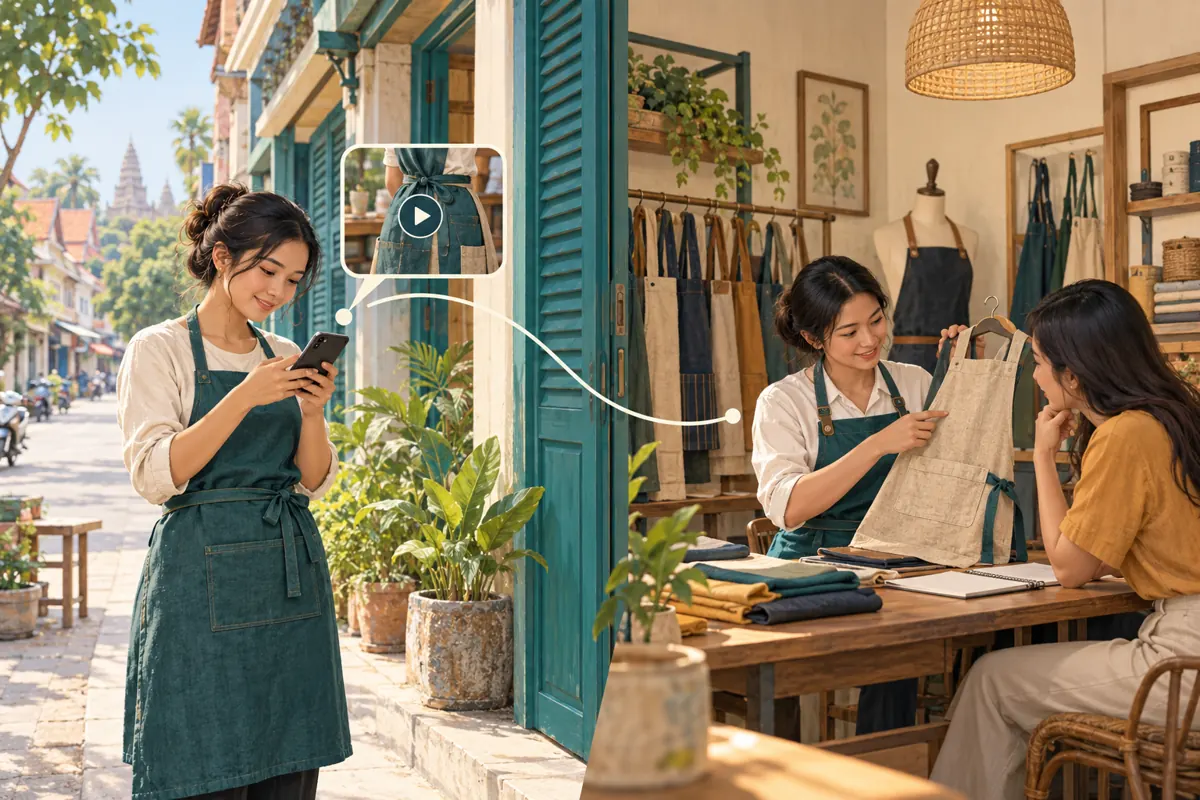
A useful product video leaves the viewer knowing what to do next. Prepare a short enquiry instruction asking for the information needed to answer accurately: the apron model, the desired quantity and the relevant fitting measurement. Explain how the shop wants that measurement taken. Avoid asking customers to post phone numbers, delivery addresses or other personal details in public comments.
Write the supporting announcement in the language your customers use, and have a fluent colleague check any Khmer wording. Keep the model name consistent across the video, description and message replies. If the shop serves both individual buyers and café teams, prepare separate answers for a single garment and a bulk enquiry. Staff should also know which questions require the owner's confirmation, such as custom embroidery or a delivery commitment. Scheduling creates preparation time; it does not supply those answers automatically.
7. Keep SMM-panel decisions outside the publishing mechanism
YouTube's scheduler controls publication. A service title in an SMM panel does not establish that it can publish the shop's video or coordinate its release. The supplied santrix-smm.com catalogue includes “YouTube Live Stream Views + Likes [ Max 5M ] | 100% Concurrent | 15 Minutes”. That exact title refers to a live-stream engagement offering, whereas this workflow concerns a recorded upload. The supplied description is empty, so the title's quantities and delivery wording should not be treated as verified performance facts.
Do not select an offering merely because it mentions YouTube. YouTube prohibits artificial increases in engagement metrics and warns that a hired promoter's actions can affect the channel. Reject methods that violate that policy. Purchased engagement is not evidence of genuine interest, sales, ad delivery or Cambodian users. For this release, the practical decision may be to place no panel order and concentrate on an accurate demonstration, appropriate sharing and reliable enquiry handling.
8. Make postponement a controlled decision
If a release condition fails, change the schedule before sending people to the video. YouTube allows scheduled publication times to be edited through the video's visibility settings. After making the change, reopen the saved details and confirm the intended time. Update the shop's announcement draft and staff note together, so an old reminder does not continue to drive work.
Give the postponement a concrete reason: the demonstrated fastening differs from current stock, the pickup instruction is wrong, or the person responsible for custom-order answers is unavailable. That reason tells the next reviewer what must be resolved. Avoid repeatedly moving the time without fixing the underlying issue. If customers have already been told a release time, provide a straightforward correction through the same communication route. Do not describe the video as available while public access is still pending.
9. Verify the viewer experience after release
At the planned release, open the watch link in a browser session that is not signed into the channel owner's account. Confirm that the intended video plays and that its title, thumbnail and description describe the same apron. Listen to the relevant explanation and check the enquiry instruction on a phone. Owner access during preparation is not a substitute for this visitor check.
Only then send the prepared announcement through places where the business has a legitimate reason to share it. Record when the check happened and who performed it. If the video is unavailable, pause the announcement and inspect the saved visibility and any notices in Studio. Avoid uploading another copy immediately: two versions can create confusion about which demonstration customers should use. Diagnose the existing video's state before deciding whether a replacement is necessary.
10. Learn from questions rather than declaring a timing victory
After publication, record the questions that reveal whether the demonstration helped. A customer asking for the demonstrated model's measurements is different from a customer asking which model appeared at all. The second question may expose a missing identifier. Repeated confusion about where the strap passes through the buckle may justify a clearer close-up. These observations suggest specific improvements without requiring a claim that a particular release hour caused sales.
Common mistakes include scheduling before stock approval, sharing a private link as though it were public, changing the time without informing colleagues, and treating a higher counter as proof of better local demand. Review the release against its original purpose: could viewers understand the fitting step and make an informed enquiry? Keep confirmed orders in the sales record, unanswered questions in the service queue and any external service delivery records separately. Combining them would make the review less useful.
Frequently asked questions
Should the shop upload at the same time it wants customers to watch?
There is no need to combine those tasks. Prepare the upload early enough to review the actual video, its accompanying information and the shop's readiness. Choose the release around a workable enquiry window. Uploading at the last moment leaves less room to discover a wrong model, unclear explanation or outdated collection promise.
Does a scheduled release guarantee that Cambodian buyers will see the video?
No. Scheduling establishes an intended publication time, not an audience or commercial result. Useful local promotion still depends on a relevant demonstration, understandable language and appropriate distribution. Judge whether genuine enquiries contain enough information to help the buyer, and avoid presenting views or purchased activity as proof of Cambodian demand.
What if the video is useful but the featured apron colour sells out?
Decide whether the video still accurately teaches the fitting step. If it does, clearly explain the availability change wherever buyers encounter the offer. If its central message promises that exact colour for immediate collection, hold the release until you can correct the message. Do not rely on a small clarification to undo a prominent false promise.
How can a small shop evaluate its chosen release time?
Start with operational evidence: was someone available to respond, were stock answers accurate, and did customers understand the next step? Keep brief notes across several releases. Product appeal, topic clarity and distribution can all differ, so a single video's results cannot establish that one time is universally better. Adjust the schedule when it improves the shop's ability to serve enquiries.
Explore the current service catalogue, create an account, or ask a specific question through support tickets.
- YouTube Help: Schedule video publish time
- YouTube Help: Upload YouTube videos
- YouTube Help: Fake engagement policy
Prepared with AI assistance. Illustrations explain the workflow and do not represent customer results.