21/10/2026 23:07
Styled Cushion or Zipper Demo? Instagram Trial Reels for Cambodian Cushion-Cover Shops
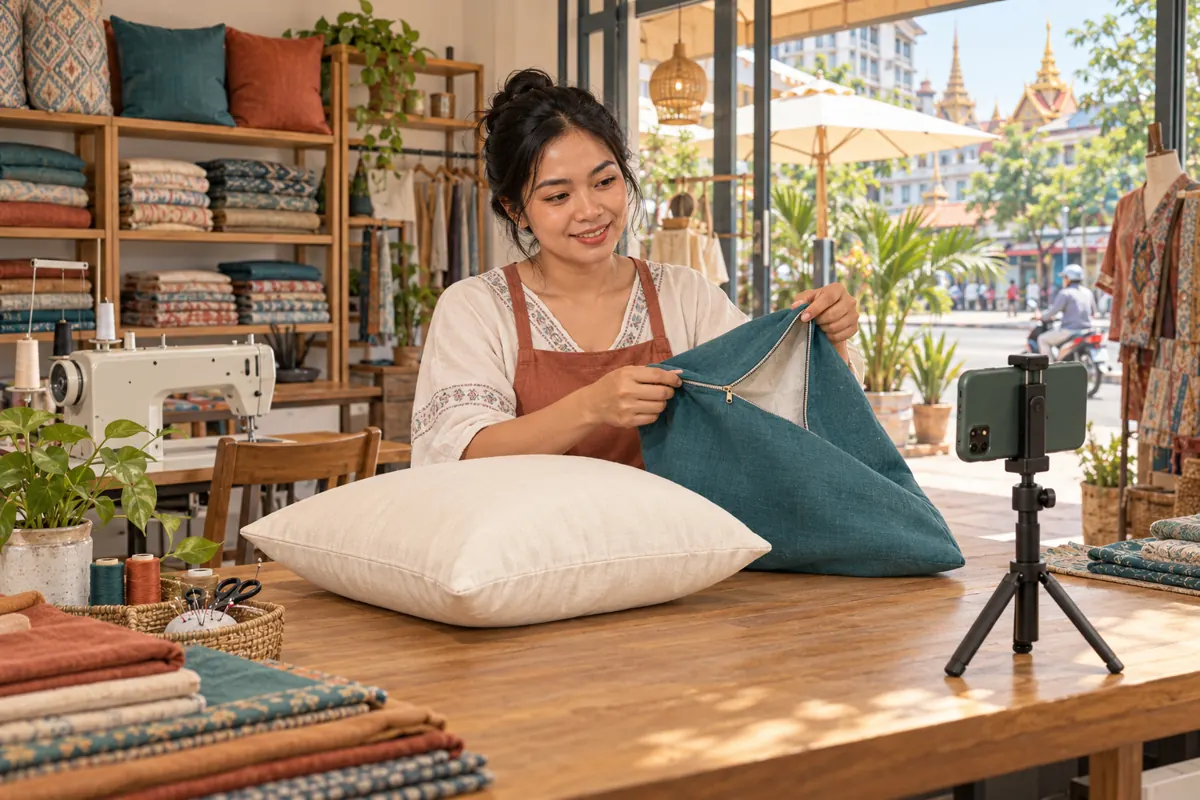
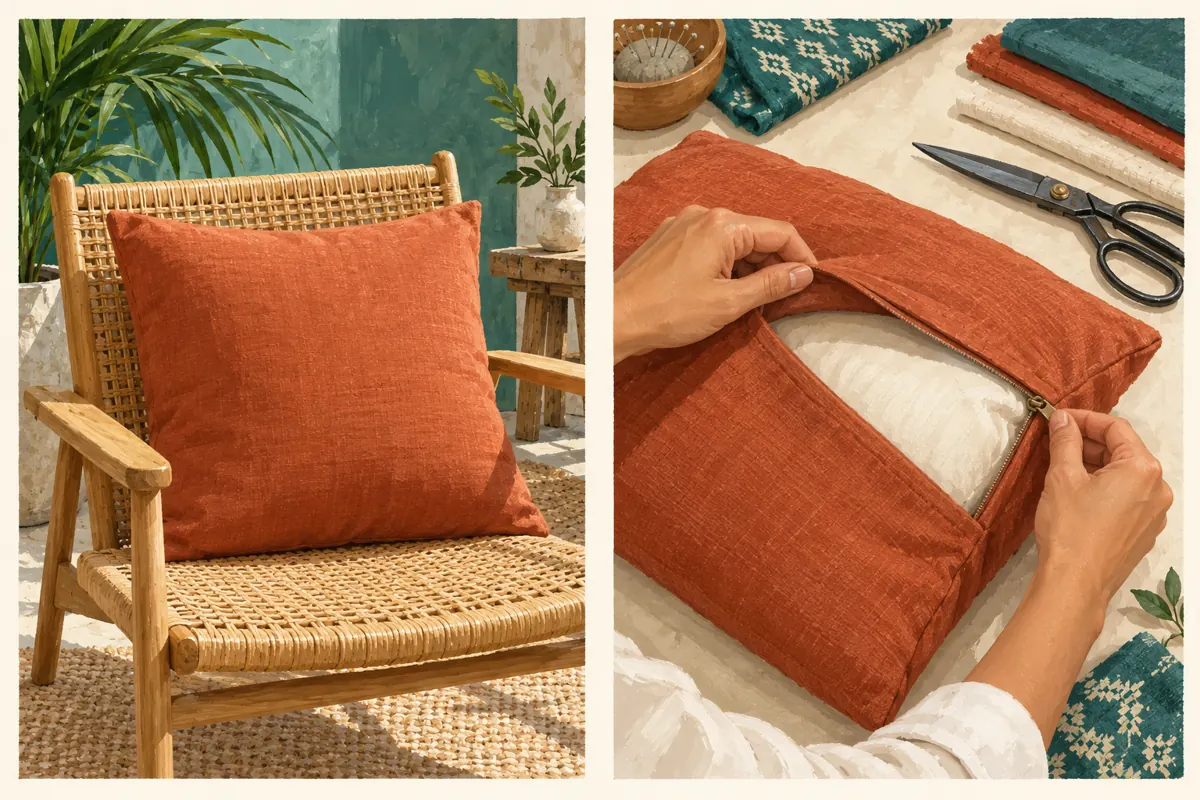
A beautifully styled cushion can attract attention while leaving the buying question unanswered: does the offer include the filling, or only the removable cover? For Cambodian cushion-cover shops, that misunderstanding creates repetitive messages and inaccurate expectations. Instagram Trial Reels offer a way to explore a different presentation before deciding whether to share it more widely. The useful experiment is specific: does opening with the zipper and separate insert make the product easier to understand? This workflow explains how to prepare that trial, interpret the response cautiously, and keep SMM panel activity from distorting the decision. The shop and customer situations below are hypothetical examples, not reported business results.
1. Choose a question that changes the filming
Imagine a hypothetical Phnom Penh shop selling removable cushion covers to households and small cafés. Its usual videos show finished cushions arranged on chairs. Prospective buyers keep asking whether the insert comes with the cover. The owner wants to try an opening that immediately shows the two pieces separately, followed by the zipper closing around the insert.
Write the experiment as one sentence: opening with the removable cover may explain what is included more clearly than opening with a decorated chair. This gives the team something observable to investigate. A broad ambition such as getting more engagement does not explain which shot to film or what customer response would justify keeping it.
Choose one product with confirmed availability. Keep its fabric, dimensions, inclusion terms and enquiry instructions consistent throughout the experiment. If the shop changes the offer while testing the presentation, it becomes harder to understand what prompted the response.
2. Understand the trial before treating it as a campaign
Meta describes Trial Reels as a way to show a reel to non-followers first. Its June 2025 announcement expanded availability to everyone. Check that the Trial control appears in your own publishing flow before planning around it. A trial audience should not be assumed to consist of Cambodian residents or people shopping for cushion covers.
A trial is not confidential. Meta notes that followers may encounter it through sharing or other surfaces. Use only approved footage, accurate offers and information suitable for public viewing. Keep customer addresses, private fabric requests and unfinished pricing discussions out of the frame.
Treat this as exploratory content research. You do not control who sees each version, and separate posts are not a controlled experiment with identical audiences. The practical goal is to find useful clues about presentation, then combine those clues with product knowledge and actual enquiries.
3. Prepare two openings with the same explanation
Storyboard two short openings. The first shows the cushion on a chair before moving to the removable cover. The second begins with the cover beside the insert and a hand opening the zipper. Both then show the same fitting action and finish with the same explanation of what the customer can buy.
Film the functional opening closely enough to distinguish the zipper, fabric edge and insert. Avoid hiding the operation behind a hand or cutting directly from an empty cover to a finished cushion. The viewer needs to understand the relationship between the parts. A calm, continuous action can be more useful than several decorative transitions.
Keep lighting, spoken language and product information reasonably consistent. Use Khmer narration when that suits the intended customers, and have a fluent colleague check any subtitles. If English is also needed, preserve the inclusion terms rather than shortening them into an ambiguous phrase. Changing language and opening shot simultaneously creates two possible explanations for any difference.
4. Make the offer understandable without prior familiarity
A new viewer may not know the shop, its location or its usual ordering process. Make each trial self-contained. Show whether the offer concerns a cover alone, an insert alone or a complete cushion. State the available size clearly and explain whether custom dimensions require confirmation. Avoid relying on an earlier post to supply essential conditions.
For the hypothetical Phnom Penh shop, the closing instruction could invite customers to send their existing insert measurements and preferred fabric. That is more useful than asking everyone to leave an emoji. It gives an interested person a concrete next step and helps the shop distinguish a product question from general appreciation.
Mention the actual pickup area and confirmed delivery arrangements when relevant. Do not imply that every province has the same delivery terms. Remove temporary offers that might expire before the review finishes, or include an explicit validity date that remains accurate wherever the video is encountered.
5. Publish deliberately and retain a review point
In Meta’s documented workflow, create the reel and enable Trial before sharing. Review the automatic sharing setting as well: Meta describes an option that uses views during the first 72 hours to decide whether to share with followers. For this workflow, choose manual review so a person checks clarity and stock before wider sharing.
Record the product, opening style, publication time in Cambodia, and planned review time. Keep a copy of the approved script and final video. These notes are useful when two similar clips look almost identical in a busy content calendar. Give one staff member responsibility for deciding whether to revise or share.
If the Trial control is unavailable, do not label an ordinary post as a trial. You can still ask consenting reviewers to explain what they think the offer includes, then revise the demonstration. That tests comprehension, although it does not reproduce Instagram’s trial distribution.
6. Read the response at comparable stages
Meta says trial engagement metrics become available after approximately 24 hours, including views, likes, comments and shares. Record what is actually displayed. Compare observations at similar elapsed times, rather than placing a newly published clip beside one that has been circulating much longer.
Read the questions as carefully as the counters. In a hypothetical response, someone asks whether the shop can make a cover for their existing insert. That suggests a different level of product understanding from asking whether the pictured chair is included. Neither message alone proves that the opening caused the difference, but both help identify the next explanation customers need.
Group questions by subject: included pieces, size, fabric care, pickup or delivery. Keep praise in a separate category. If very little response appears, record that there is insufficient evidence. Do not invent a winning format because the calendar requires a conclusion. A useful result can be a clearer question for the next video.
7. Keep SMM panel engagement outside the experiment
The supplied santrix-smm.com catalogue includes the exact service title “Instagram Comments ~ Custom ~ 𝐇𝐐 Profiles ~ 10k-20k/Day ~ Non Drop ~ INSTANT”. Its name identifies a custom-comment offering, but the supplied description is empty. The wording does not establish commenter authenticity, Cambodian audience origin, delivery performance or suitability for this experiment.
Ordering comments that ask about cushion sizes would manufacture the very signal the shop is trying to observe. Purchased engagement is not evidence of genuine interest, sales, advertising delivery or Cambodian users. Instagram’s published Community Guidelines also prohibit artificially collecting engagement and repetitive comments. Do not use purchased comments or likes to validate a trial.
If a colleague or agency has already arranged engagement, record what happened and when, and mark the affected observations as unsuitable for judging spontaneous response. Do not subtract a purchased quantity and assume the remainder is clean evidence. Keep any service delivery discussion separate from the editorial decision and from customer demand reporting.
8. Decide whether to share, revise or investigate further
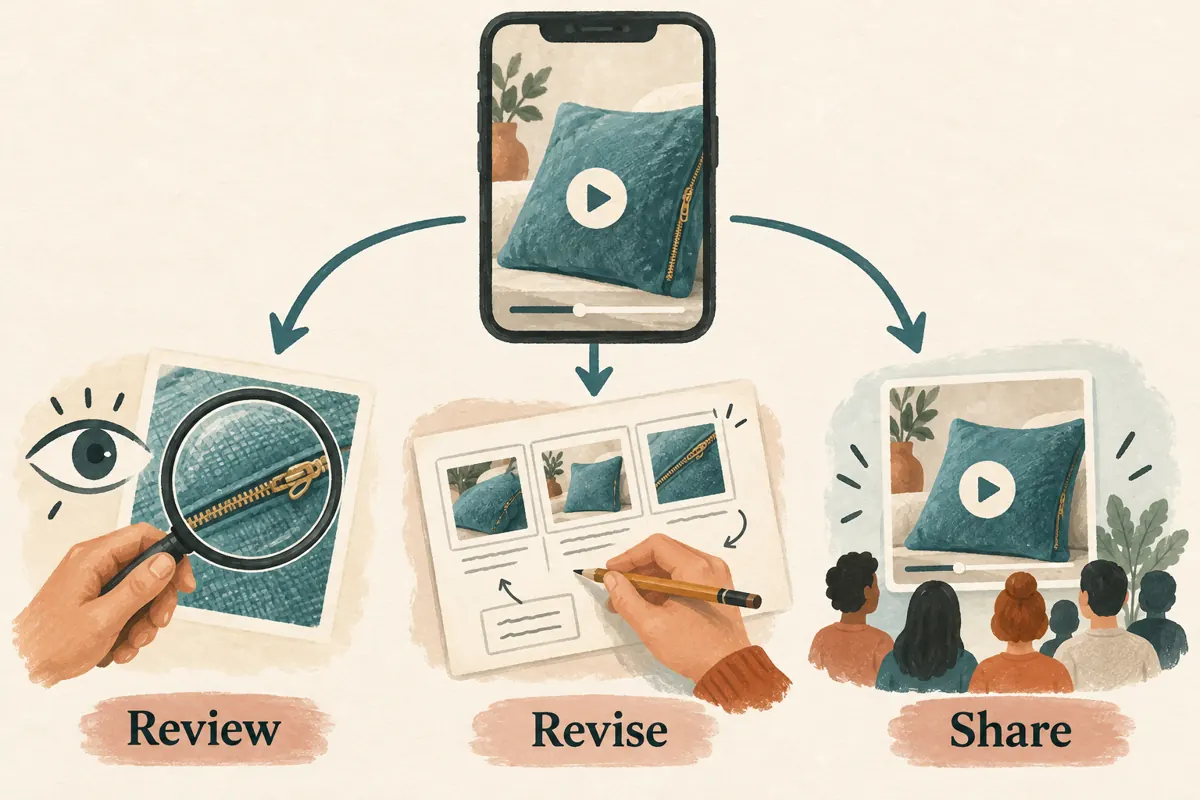
Share more widely when the product explanation is accurate, the offer remains available and the presentation is useful enough for existing customers. A trial does not need a dramatic counter to justify becoming a helpful product reference. The owner should be comfortable showing the same clip to someone who walks into the shop with a practical fitting question.
Revise when an avoidable misunderstanding persists. If viewers still think the insert is included, show the empty cover clearly and state the inclusion terms earlier. If they understand the cover but cannot judge fit, the next video should demonstrate measurement. Changing the music would not address that particular problem.
Investigate further when the evidence is mixed or sparse. Ask a colleague unfamiliar with the product to describe the offer after one viewing. This is a comprehension check, not a customer testimonial. Avoid announcing that Cambodian buyers prefer one format when the available evidence cannot establish audience location or preference.
9. Keep wider promotion connected to fulfilment
Before wider sharing, check the fabric stock, sewing capacity and promised response process. A clear demonstration can still disappoint customers if the displayed material is unavailable or staff cannot explain custom sizing. Prepare a straightforward reply requesting the measurements needed for a quote, without implying that sending a message reserves an order.
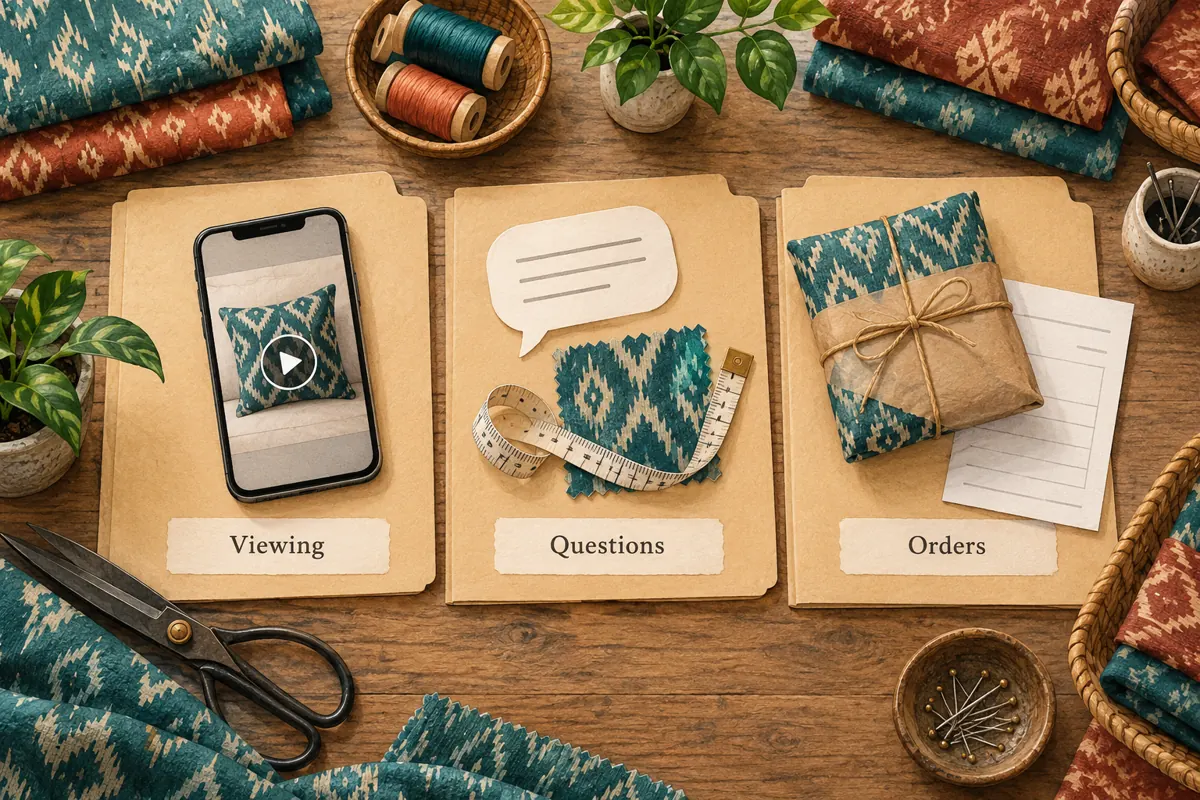
Maintain separate records for viewing activity, relevant enquiries and confirmed orders. An enquiry becomes an order only under the shop’s actual confirmation process. If someone says the reel prompted their message, record that as their reported source. Do not attribute every later purchase to the trial simply because the dates overlap.
Keep the next content decision modest. The zipper opening might become the default for removable covers, while decorative scenes remain useful for showing colour combinations. Different presentations can answer different customer questions; the purpose of testing is to choose deliberately.
10. Avoid shortcuts that make the result misleading
The most common mistake is changing too much at once: a different fabric, a discount, a new language and a faster edit. Even if the response changes, the team cannot tell which alteration mattered. Another mistake is asking staff to flood the comments with product questions and later treating those questions as independent demand.
Do not treat a trial as a hidden draft, a Cambodian targeting tool or a promise of future reach. Avoid deleting and reposting repeatedly merely to chase a more flattering counter. Set a review point, write down what was learned and decide on the next useful action. Preserve uncertain findings as uncertain; that makes the record more valuable when planning the next demonstration.
Frequently asked questions
Does a Trial Reel test the video specifically on Cambodian shoppers?
Do not make that assumption. Non-followers are not a defined local customer sample. Khmer narration, a clear pickup area and relevant product information help communicate who the offer serves, but they do not establish audience origin. Confirm delivery needs through actual enquiries before drawing conclusions about local demand.
Can we compare the trial directly with our usual follower posts?
Use the comparison as background, not a controlled verdict. Established followers may already understand your products, while unfamiliar viewers need more explanation. Publication timing and the offer may also differ. Compare similar observation windows and note the differences before deciding that one presentation is better.
What if the styled cushion gets attention but the zipper demonstration gets practical questions?
Return to the original objective. If the shop needs to explain the removable cover, practical fitting questions may be more informative than general praise. Check whether the demonstration is accurate and easy to follow. You can retain the styled scene for visual inspiration while using the functional clip to answer buying questions.
Should we buy a few comments to encourage conversation?
No. They would compromise the evidence and can conflict with Instagram’s authenticity rules. Invite a relevant question in the video and respond helpfully to genuine messages. If little discussion follows, improve the explanation or run another clearly defined test rather than manufacturing apparent customer interest.
When should a trial become a regular product reference?
When it answers a recurring question accurately and the shop can fulfil the offer it describes. Review clarity, current availability and enquiry handling before sharing more widely. Keep the reference under review as fabrics, dimensions or inclusion terms change; an initially useful demonstration can become misleading when the offer changes.
Explore the current service catalogue, create an account, or ask a specific question through support tickets.
- Meta: Test Content With Non-Followers Using Trial Reels
- Meta: Inspiring Creativity That Brings People Together
- Instagram Community Guidelines
Prepared with AI assistance. Illustrations explain the workflow and do not represent customer results.