19/10/2026 16:00
One Demo, Two Spoken Languages: YouTube Audio Tracks for Cambodian Coffee-Equipment Shops
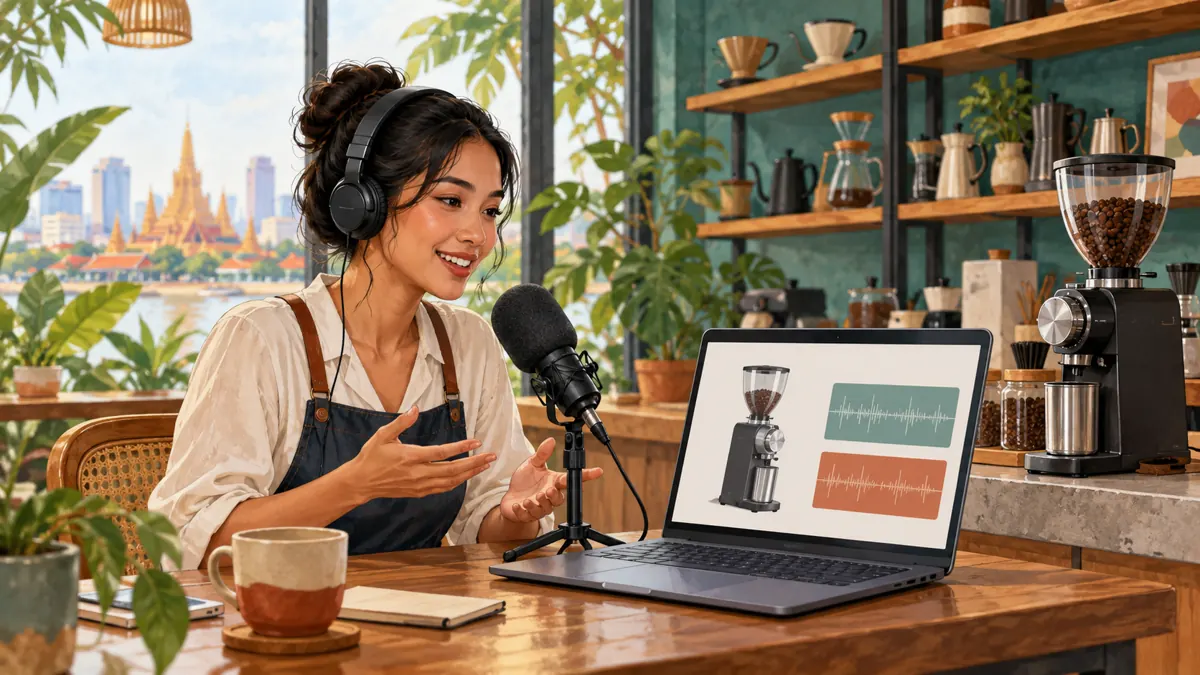
A useful coffee-grinder demonstration can still leave a potential buyer confused if the explanation is in a language they struggle to follow. For a Cambodian equipment shop serving Khmer-speaking operators and English-speaking café staff, recording another spoken-language version may solve a real communication problem. The job is to preserve the same product facts, match the narration to the visible actions and help viewers ask a relevant next question. This workflow explains how to prepare that version, check whether YouTube supports the upload on your channel, and review the finished experience before promotion. It also explains why an SMM panel engagement order cannot establish whether either language version helps customers.
1. Choose a demonstration with a real language need
Start with a customer task rather than a broad ambition to reach everyone. A suitable first video might explain how to identify the hopper, adjustment dial and grounds container on a particular grinder. Ask staff which explanation they repeatedly give in another language. Use actual enquiry patterns to choose the language, without assuming that every Cambodian viewer prefers Khmer or that every English-speaking viewer lives overseas.
Consider a hypothetical Phnom Penh shop whose Khmer demonstration is already useful at the counter, but whose English-speaking customers ask staff to translate the component names. That is a concrete reason to prepare English narration. If customers instead cannot see the dial clearly, translation will leave the main problem unresolved. Improve the close-up first. Choose one stable demonstration that the team can maintain when product information changes.
2. Decide whether another audio track fits the problem
YouTube's multi-language audio feature lets creators attach their own recorded language tracks to one video. It is distinct from automatic dubbing. Official guidance currently lists access to Advanced features as the eligibility requirement. Check the controls available on your channel before commissioning a full recording; the supporting YouTube instructions are listed in the sources.
Another track suits footage whose actions and explanation remain the same across languages. A separate video is more practical when the second audience needs different examples, a different product or substantially longer explanations. Captions may be sufficient when viewers mainly need help reading unfamiliar terms. If the audio upload control is unavailable, prepare reviewed captions or a clearly labelled separate version instead of promising customers an option they cannot select.
3. Freeze the product facts before translating
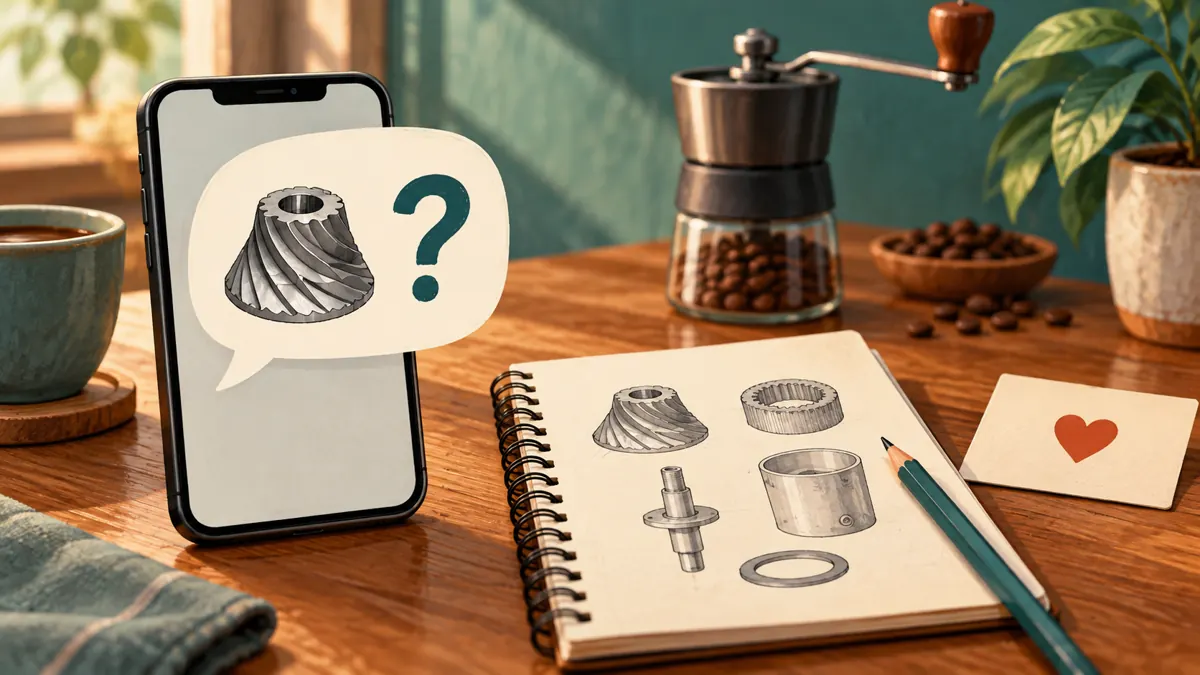
Create a short fact sheet for the exact model shown. Include the component names, the purpose of each visible control, the accessories actually included and any limitations mentioned in the demonstration. Check technical statements against the relevant manufacturer documentation. Avoid turning a visual introduction into operating advice that the shop has not verified for that model.
Keep temporary prices, stock promises and delivery arrangements out of the spoken track where possible. Those details can become outdated before the demonstration does. In the hypothetical shop, the script might explain where to find the model label and invite viewers to send that identifier when asking about compatibility. Both language versions should request the same information and make the same distinction between a general demonstration and advice for a customer's particular machine.
4. Translate against the pictures, not just the transcript
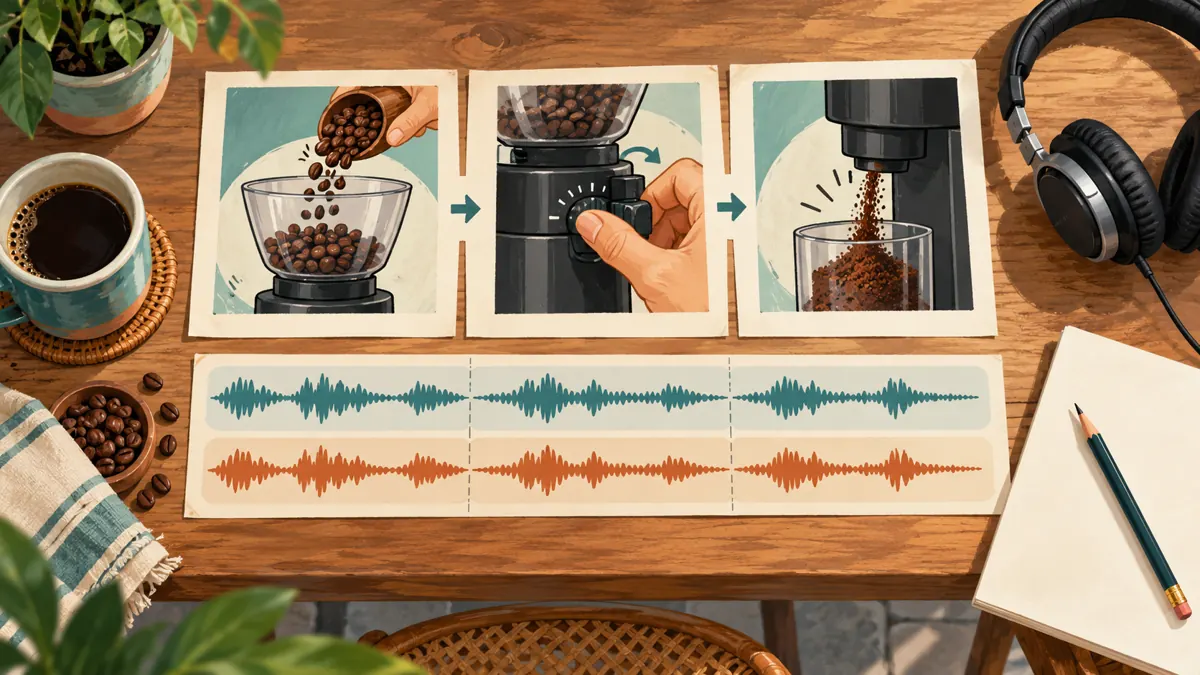
Prepare a simple working sheet with the scene, the original meaning and the proposed second-language sentence. Watch each scene while translating it. A phrase equivalent to 'this part' may be understandable when a hand points at the hopper, but confusing if the translated narration finishes after the camera moves to the container. Name the component when a pronoun could become ambiguous.
Build a small glossary for recurring terms. Ask someone who understands the equipment and the target language to review it. Retain a genuine model name exactly, while explaining its role in ordinary language. For Khmer narration, agree how English labels printed on the machine will be spoken. For English narration, avoid adding technical vocabulary merely to sound professional. The customer should be able to connect each spoken term with something visible.
5. Make room for natural speech
Different languages may need different amounts of time to express the same point. Read the translated script aloud while playing the finished video. Mark passages where the speaker must rush or where an explanation ends after the relevant object disappears. Shorten unnecessary wording while preserving the product fact. Do not remove a qualification simply because it is inconvenient to fit.
For a new demonstration, leave pauses around important close-ups before finalising the picture edit. For existing footage, decide whether the available time supports a clear dub. In a hypothetical review, a translator may need an extra phrase to distinguish the bean hopper from the grounds container. If the shot cannot accommodate that distinction naturally, revising the video may be better than accelerating the voice. A fluent recording is not necessarily an understandable recording.
6. Record a complete, consistent listening experience
Record in a quiet space with a stable microphone position. Listen for fans, street noise and equipment hum before doing the whole script. Keep the original picture edit available so the narrator can follow the scene changes. Record difficult component names separately if needed, then check that any replacement phrase matches the surrounding voice and room sound.
Build the second-language mix deliberately. Avoid leaving the original narrator loudly underneath the new voice. Preserve useful equipment sounds when they help explain the scene, but keep speech intelligible. Use only audio you have permission to include. Compare both versions on headphones and a phone speaker at ordinary listening levels. A dramatic change in loudness can make switching languages uncomfortable even when the translation itself is accurate.
7. Upload the approved track and test the viewer controls
YouTube's documented desktop route is Studio, Languages, the chosen video, Add Language, then Add beside Dub. Select a supported audio-only file roughly matching the video's duration and publish it when ready. If an automatic dub already occupies that language, YouTube says it must be deleted before your own version can be uploaded. Confirm what exists before making that change.
Then review the watch page. Viewers can select Settings, Audio track and an available language, according to YouTube's viewer guidance. Test that route on the devices your staff use for customer demonstrations. Do not judge success from the upload confirmation alone. Check the opening, every important component change and the ending. Confirm that the selected language plays throughout and that the final invitation to enquire has not been cut short.
8. Ask reviewers to explain what they understood
Give a fluent reviewer a task without first explaining the answer. Ask them to identify the part discussed, describe what the demonstration does and does not establish, and say what information they would send the shop next. Let them watch the second-language version without reading the translation sheet. This exposes problems that a translator who knows the script may overlook.
Record the exact point of confusion and the relevant scene. 'The English sounds good' is less useful than 'I thought the container was included with every model.' Fix the sentence or picture responsible, then repeat that specific comprehension check. These are internal editorial tests, not customer testimonials or evidence of market demand. A small review can reveal a misunderstanding without supporting a claim that the whole audience will understand.
9. Promote the language option with a useful next step
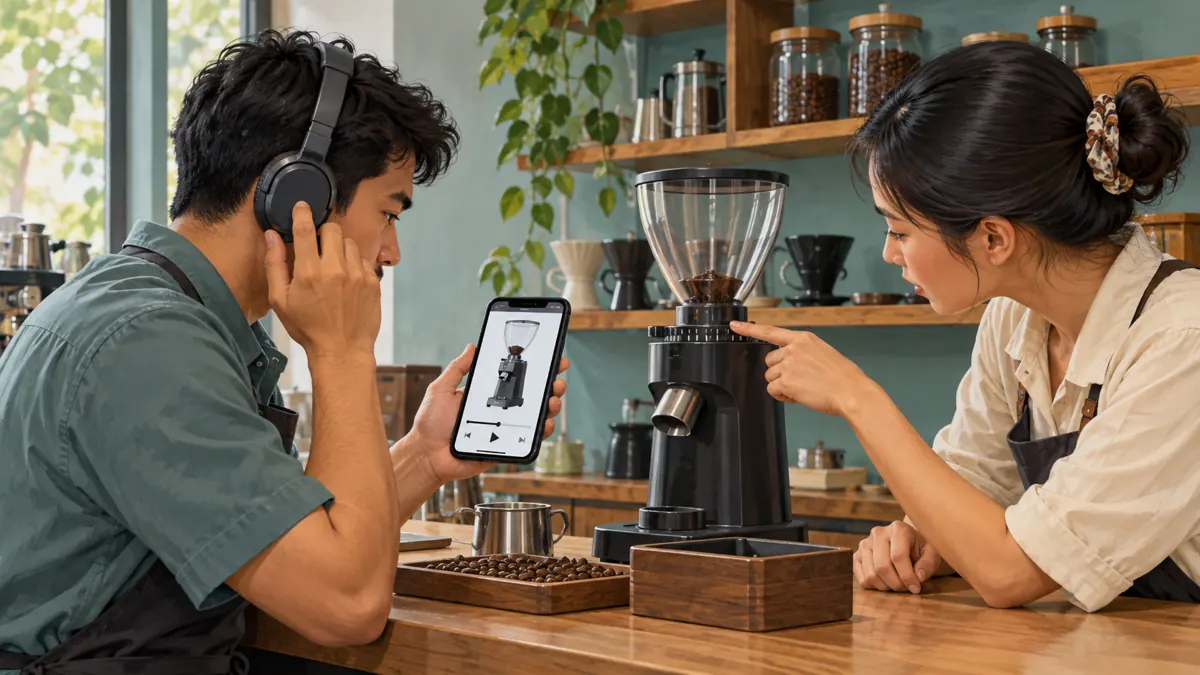
Once both versions pass review, explain the available audio choice wherever you share the demonstration. A hypothetical shop message could say: 'This grinder overview has Khmer and English audio. Choose your language under Audio track in the video settings. Send the model name if you want us to check which accessory you mean.' Adapt the message to the receiving audience rather than posting an identical multilingual block everywhere.
Share the video in relevant customer conversations and on the shop's own social channels, where the demonstration answers an existing question. Avoid repeatedly dropping it into unrelated discussions. Keep the enquiry destination easy to identify, and make sure someone can respond in the promoted language. Offering English audio creates an expectation of understanding; it does not require every staff member to speak English, but it does require a workable handoff.
10. Make the SMM panel decision separately
The supplied public catalogue includes the exact title 'YouTube Like ~ Max 5k ~ 5k/days ~ Instant ~ 𝗥𝗘𝗙𝗜𝗟𝗟 30D'. Its name identifies a likes offering, but no supporting description was supplied. Treat the timing and refill wording as catalogue claims, not verified delivery facts. Nothing in that title establishes Khmer comprehension, Cambodian viewers, café purchasing intent or demand for the translated demonstration.
YouTube prohibits artificial increases in engagement metrics and warns that a hired promoter's methods can affect the channel. That makes platform compliance a decision before ordering, not an issue solved by keeping tidy records. Do not purchase artificial likes to validate the new narration. Purchased engagement is not evidence of genuine interest, sales, ad delivery or Cambodian users. For this project, translation review and legitimate distribution address the actual problem more directly.
11. Review questions and maintain both versions
After sharing, keep a brief record of genuine questions that refer to the demonstration. Note the language used, the confusing component or claim, and whether the person supplied enough information for a useful reply. Do not infer nationality from language. An English enquiry may come from Cambodia, while a Khmer enquiry may come from someone elsewhere. Record location only when it is relevant and voluntarily provided.
Use those questions to decide the next edit. Repeated confusion about one component suggests a better close-up or clearer wording. Requests about another model suggest a separate demonstration. When facts change, review both spoken versions together, along with any captions and enquiry instructions. Keep the approved scripts and audio files with a clear version date so an old translation is not accidentally restored during a later update.
Frequently asked questions
Should a small Cambodian shop record Khmer or English first?
Start with the language used by the customers the demonstration is primarily intended to help. There is no need to make English the original simply because the video is on YouTube. Choose the second language from recurring enquiries and available review support. A well-reviewed version in one additional language is more useful than several versions nobody on the team can check.
Can we use a bilingual employee instead of a professional narrator?
Yes, if the employee is comfortable recording and can explain the equipment clearly. Separate narration from approval: another fluent person should check meaning and timing. Give the employee a verified script, a quiet recording space and time for corrections. Familiarity with the product helps, but it can also make unexplained technical terms seem more obvious than they are to customers.
Does adding an audio track also solve caption accessibility?
No. Spoken narration and readable captions serve different needs. Plan a separate caption review for customers who watch without sound or need text support. Check component names, timing and any qualifications against the approved script. Do not assume that a clear recording means the displayed text is correct, or that captions will explain a component that never appears clearly on screen.
What should we do if the translated version is much longer?
First remove repetition and replace awkward phrasing with a natural equivalent. Keep technical meaning and necessary qualifications intact. If it still does not fit, reconsider the picture edit or create a separate language version with appropriate pacing. Racing through the narration can hide the very distinctions the translation was meant to clarify.
How can we judge value without treating likes as success?
Look for specific evidence that the communication task improved: reviewers identify the right component, customers reference the correct model, or staff can answer a follow-up without translating the whole demonstration again. Keep these observations modest and contextual. They can guide the next production decision, but they do not by themselves prove increased sales or establish that promotion caused a business result.
Explore the current service catalogue, create an account, or ask a specific question through support tickets.
- YouTube Help: Add Multi-language features to your videos
- YouTube Help: Watch videos in your preferred language
- YouTube Help: Fake engagement policy
Prepared with AI assistance. Illustrations explain the workflow and do not represent customer results.