20/10/2026 17:54
Which Zipper Guide Do Buyers Need? TikTok Playlists for Cambodian Sewing-Supply Shops
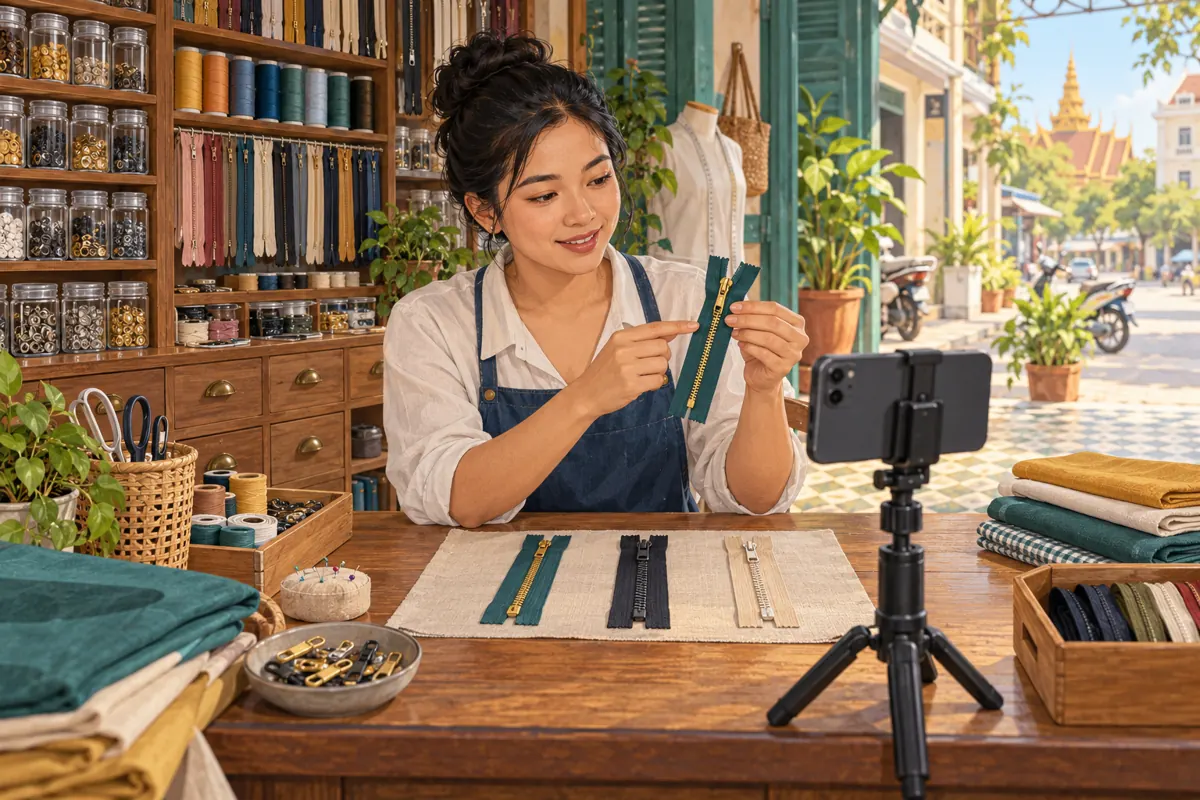
A customer sees a zipper demonstration and asks whether the shop sells the same item. The assistant replies with another video, but that clip shows colour choices rather than the zipper’s construction. Both videos may be useful, yet the customer still cannot identify what to request. For Cambodian sewing-supply businesses, this is a practical social media problem: the demonstrations exist, but the route through them is unclear. A small TikTok video library organized around buyer questions can help. This workflow explains how to plan that library, use playlists where available, and judge its usefulness without treating purchased engagement as customer demand.
Start with the question that blocks the enquiry
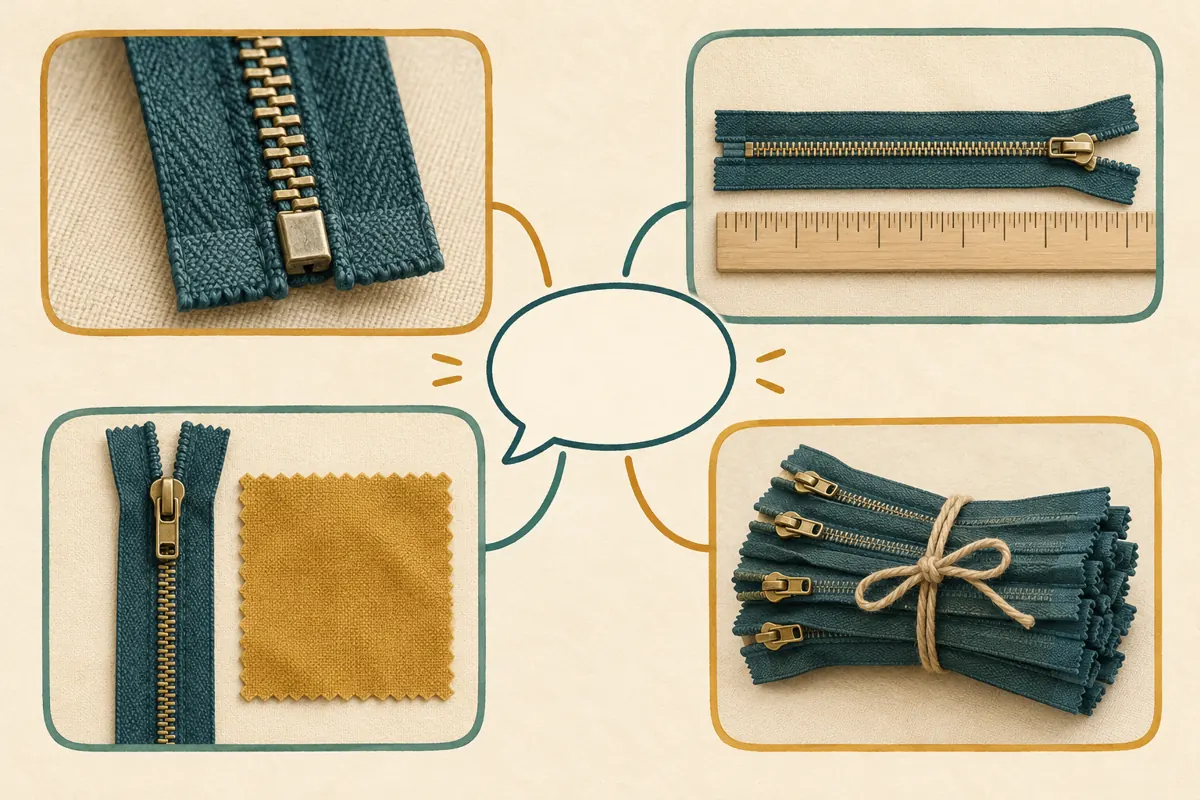
Begin with recent questions your staff actually answer. Remove customer names and private details, then describe the uncertainty in ordinary language. A buyer may need to identify a zipper end, understand which length to request, compare a colour with fabric, or clarify whether the shop sells a complete zipper or a separate component. These uncertainties deserve different demonstrations because each requires different evidence.
In a hypothetical example, a Phnom Penh sewing-supply shop has several attractive clips showing drawers of colourful zippers. Customers still send vague requests such as “the blue one.” The shop’s first task is to make the products distinguishable. It chooses identification as its starting category and films the relevant details closely. A collection becomes useful when it helps someone ask a clearer question, even before anyone places an order.
Check whether playlists are available before planning around them
TikTok describes creator playlists as a way to group public videos so people can watch related material together. Its Help Center also notes that the feature is not available everywhere. Check the tools shown in your own account before promising viewers a playlist. The official reference is TikTok’s [Watch videos in a playlist](https://support.tiktok.com/en/using-tiktok/exploring-videos/watch-videos-in-a-playlist) help page.
If playlist creation is available, follow the account’s current prompts to name a collection and select the relevant posts. Inspect the finished result before announcing it. If the feature is absent, keep the same editorial structure through consistent topic wording and recognizable covers. Staff can share the individual guide that answers a question. Do not delay useful filming or buy engagement in an attempt to obtain access; this workflow does not depend on an assumed follower threshold.
Build three collections with clear boundaries
For the hypothetical shop, three starting collections are enough: identifying the zipper, choosing the requested measurement, and comparing colour samples. Write a one-sentence purpose for each before selecting videos. The identification collection explains visible differences. The measurement collection shows what the shop needs measured. The colour collection explains how to reference a sample and when a physical comparison is necessary.
Use the vocabulary customers use at the counter. For a primarily Khmer-speaking audience, have a fluent staff member choose natural Khmer names rather than translating an unfamiliar technical label mechanically. English examples in this article are planning aids, not instructions to change the shop’s language. Keep supplier terminology alongside the plain-language explanation where it helps identify a product. Avoid creating many almost identical collections that force customers to learn your internal stock system before asking a question.
Audit existing clips before adding them
Review every candidate video from beginning to end. Record its main question, the sample shown, any spoken product code, and whether its information remains usable. A clear demonstration may still contain an outdated price, a temporary bundle, or a statement about stock that no longer applies. Adding it to a useful collection gives that old claim another opportunity to confuse buyers.
Choose the strongest answer to each question rather than including everything already filmed. If two clips cover the same detail, prefer the one with the clearer view and fewer qualifications. Keep a separate list of missing explanations. For example, a close-up may show a slider beautifully while never showing the bottom end that the customer needs to compare. That gap calls for a new shot, not a more persuasive caption. Resolve contradictions before directing further attention toward the collection.

Make every demonstration understandable on its own
A viewer may encounter a clip without seeing your other demonstrations. Open with the object and the question being answered. Show the relevant detail before introducing extra colour options or promotional language. Use a plain background and keep fingers clear of the feature being discussed. When the demonstration concerns measurement, show both reference points and state the unit; do not rely on a quick sweep across a ruler.
Close with the information the viewer should provide next. A hypothetical identification clip might ask for a clear photograph of the zipper end and a description of the intended garment or bag. It should also explain when staff need to inspect a sample before confirming suitability. Matching appearance alone does not establish compatibility. Film real merchandise for product guidance; editorial illustrations can explain the workflow but should never become substitutes for accurate stock photographs.
Test the library with a concrete customer task
Ask a colleague who did not organize the videos to try one realistic task. For example: “Find the guide that explains what to photograph before asking about a replacement.” Let the colleague browse without coaching. Observe which collection name they choose, which thumbnail they open, and where they become uncertain. This is an internal usability exercise, not a customer testimonial or proof of sales performance.
Repeat with a different task, such as finding the measurement explanation. If the colleague selects the colour collection first, investigate the labels and cover images before making more content. Check the experience on an ordinary phone at a comfortable viewing size. Listen to the spoken explanation, then review the visual instructions without sound. Fix the specific obstacle identified by the test and repeat that task. There is little value in expanding a library whose first few guides are difficult to distinguish.
Connect the guide to a useful enquiry
Decide what information staff need to continue the conversation. For this shop, an enquiry might need a product reference or clear photograph, the requested length and unit, a colour reference, and the quantity. Ask only for details relevant to the request. A customer trying to identify an unfamiliar zipper should not have to supply a technical name before receiving help.
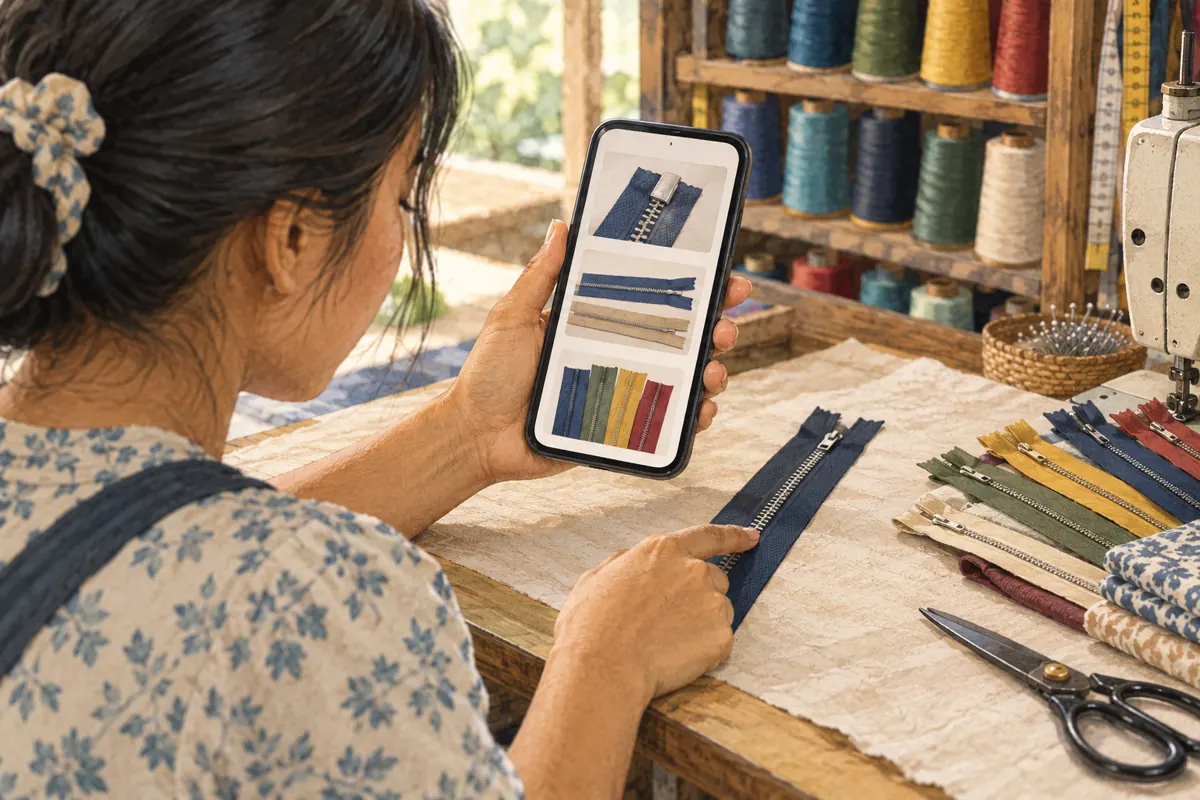
In a hypothetical exchange, a buyer sends a screenshot of a colour demonstration and requests zippers for a batch of pouches. The assistant first checks which sample the screenshot shows, then asks for the required length and quantity. The colour guide has helped establish a reference, but availability and suitability still need confirmation. Keep delivery addresses and other personal information out of public comments. Tell customers which contact route your shop actually monitors, and assign someone to handle questions after a promotional post.
Evaluate SMM catalogue entries without confusing their purpose
The supplied santrix-smm.com catalogue includes the exact title “TikTok - Likes + Views ~ Max 1M ~ 𝐍𝐎 𝗥𝗘𝗙𝗜𝗟𝗟 ~ 20k-50k/days ~ Instant”. Its wording identifies a likes-and-views offer, but the supplied description is empty. The title alone does not verify delivery speed, account quality, audience location, or business results. It provides no basis for claiming that Cambodian sewing customers will find or understand a particular guide.
TikTok states that it prohibits fake engagement, including services that artificially increase engagement. See its official explanation, [How TikTok counters deceptive behaviour](https://newsroom.tiktok.com/how-tiktok-counters-deceptive-behaviour?lang=en-150). Do not use artificial activity to make a collection appear trusted. For this workflow, choose content organization, accurate demonstrations, and genuine distribution through the shop’s existing communication channels. A panel listing is not evidence of official affiliation, ad delivery, playlist access, or a solution to a navigation problem.
Review understanding separately from attention
Set a review date and record the questions staff receive during the chosen period. Look for specific evidence: buyers identify the sample more clearly, include the requested measurement, or explain where the guide remained confusing. Record unresolved questions too. A message that still lacks essential details is useful feedback about the explanation, even when the video attracted attention.
TikTok Studio offers content-management and performance tools, as described in [TikTok’s introduction to TikTok Studio](https://newsroom.tiktok.com/helping-creators-bring-creativity-to-life-with-tiktok-studio?lang=en&post_id=noID). Use available analytics as context alongside your enquiry notes. A view does not demonstrate comprehension, and a like does not establish purchase intent. Keep any historical purchased activity identifiable in internal reporting; it cannot establish Cambodian audience origin or genuine interest. If enquiries improve, describe the observed change carefully rather than claiming the playlist caused sales you cannot trace.
Maintain the library when products and questions change
Give one staff member responsibility for reviewing the collections whenever an important sample, offer, or explanation changes. Maintain a simple record of each guide’s purpose, public post reference, review date, and known limitations. Separate a durable explanation from a temporary stock announcement. This makes it easier to notice when a helpful demonstration contains a claim that has become stale.
Common mistakes include using broad names such as “Our Products,” adding unrelated popular clips, leaving contradictory instructions together, and assuming customers will watch every video. Another mistake is treating screen colour as a precise physical match. Correct these problems where they occur. Revise an unclear demonstration, simplify a collection boundary, or explain the need for a sample comparison. The practical standard is straightforward: a buyer should be able to find an answer and understand what remains to be confirmed by the shop.
Frequently asked questions
What should a Cambodian shop do if it cannot create TikTok playlists?
Use consistent topic names and recognizable covers, and keep a staff reference list of individual public video links. Share the specific explanation that fits each enquiry. The editorial work remains useful without the feature. Check availability through the account’s own tools rather than relying on an unofficial promise that a purchase will unlock access.
Should every zipper demonstration go into the same collection?
Only if the collection still answers a clear, coherent need. Identification, measurement, and colour comparison usually involve different questions. Start with a few clear boundaries and expand only when the existing material justifies another category. A small useful collection is easier to maintain than an archive containing every clip the shop has produced.
Can more likes prove that the measurement guide is clearer?
No. Likes do not show whether viewers understood the reference points or supplied the correct unit. Purchased engagement is especially unsuitable as evidence of understanding. Test the explanation directly and review genuine questions. If buyers repeatedly measure the wrong part, improve the demonstration regardless of how much attention the post receives.
How should the shop handle a guide featuring an unavailable colour?
First decide whether the clip teaches a durable comparison method or makes a current availability claim. If viewers could reasonably mistake it for an offer, stop directing them toward it until the message is corrected or replaced. Staff should confirm current options in the enquiry; an old demonstration does not reserve stock or guarantee a colour match.
What is a sensible first result to look for?
Look for fewer unresolved identification questions and more enquiries containing the details staff need. These are observations to document, not guaranteed outcomes. Track confirmed orders separately, and do not attribute them to the video library without supporting evidence. The initial goal is a clearer conversation that helps the buyer and shop make an informed decision.
Explore the current service catalogue, create an account, or ask a specific question through support tickets.
- TikTok Help Center: Watch videos in a playlist
- TikTok: How TikTok counters deceptive behaviour
- TikTok: Helping Creators Bring Their Creativity to Life with TikTok Studio
Prepared with AI assistance. Illustrations explain the workflow and do not represent customer results.