20/10/2026 21:36
Can New Customers Message You? TikTok Enquiry Checks for Cambodian Cake-Topper Shops

A cake-topper demonstration can make the product easy to understand while leaving the next step unclear. A viewer wants a different name, another finish or collection before a celebration, but can they actually contact the shop? For Cambodian businesses promoting custom work on TikTok, checking that route deserves as much attention as filming the sample. This guide follows an enquiry from the public video through message review and into a usable quotation brief. It also explains why an SMM-panel activity count cannot tell you whether that route works. The shop scenarios and sample messages below are hypothetical, not customer results.
1. Define what the video should help a buyer ask
Start with one product decision. A hypothetical Phnom Penh workshop might show how a layered paper topper looks on a cake, then invite viewers to ask about a version for their own celebration. The demonstration should distinguish the topper from the cake, stand and other decorations. Otherwise, the first enquiry may concern an entire arrangement that the workshop does not sell. State what is included before asking people to contact you.
Choose an initial outcome that staff can recognise: an enquiry containing the required date and a reference to the demonstrated design. A greeting is a conversation opening; it is not yet a production brief. This distinction helps the person filming and the person answering messages work toward the same result. It also gives the shop a useful question to review later: did this particular video help people explain what they wanted?
2. Check message access before saying “send us a message”
TikTok documents message-request controls under Profile, Menu, Settings and privacy, Privacy, then Direct messages. Review the available settings for Potential connections and Others on TikTok. Private-account restrictions can also affect access. Use the controls actually displayed on your account rather than assuming that publishing a public video opens every messaging route. See TikTok’s [Manage direct messages guidance](https://support.tiktok.com/en/account-and-privacy/account-privacy-settings/direct-message?invalid_lang=fi).
Next, ask a consenting adult colleague with an eligible account and no existing chat relationship to test the customer journey. Have them open the public post, find the shop profile and attempt a clearly labelled test enquiry. Record what each person sees. Testing only from a familiar account may overlook the experience of someone discovering the workshop for the first time. If the route fails, correct the invitation or provide another verified business contact method before promoting the post further.
3. Give message requests an owner
TikTok’s guidance places requests under Inbox, then Message requests, with some messages appearing in Filtered requests. Requests can be accepted, deleted or reported. Accepting opens the conversation; it does not confirm a purchase. Build your shop routine around those separate decisions. The relevant controls are described in TikTok’s [message management instructions](https://support.tiktok.com/en/account-and-privacy/account-privacy-settings/direct-message?invalid_lang=fi).
Assign one person to review incoming enquiries during stated working periods and another to cover absences. Choose periods that fit cutting, assembly and counter service rather than promising continuous availability. Keep a short internal note of unresolved conversations and their next action. For example, a hypothetical request may be waiting for a cake diameter, while another needs the workshop owner to check material availability. Reviewing the inbox is useful only when somebody takes responsibility for what happens afterward.
4. Ask for a small, useful first message
Make the invitation easy to follow on a phone. A hypothetical English version could say: “For a custom topper enquiry, send the design shown, your required collection date and the approximate topper width. We will check the details before quoting.” Have a fluent staff member prepare the equivalent wording for Khmer-speaking customers. Preserve the meaning of collection date: the celebration date alone may not reveal when the buyer needs the finished item.
Do not make the opening message carry every production detail. A long questionnaire can turn a simple enquiry into unnecessary work. First establish the design, deadline and general size. Then ask about wording, colour, quantity and collection arrangements. Avoid requesting a home address or payment information merely to discuss feasibility. If a customer has not measured anything yet, explain which dimension matters and offer a simple measuring example rather than treating the enquiry as incomplete and abandoning it.

5. Turn the conversation into a precise quotation brief
Once staff can discuss the request, resolve ambiguity in a consistent order. Check the deadline first, because an impossible date makes detailed design discussion unproductive. Then confirm the product construction and size. A topper’s decorative width and its total height including the stem are different measurements. Ask which one the customer supplied. Show the relevant dimension on a generic sample when words alone could produce conflicting interpretations.
For personalised wording, ask the customer to type the exact text and confirm it again in the design proof. Do not silently convert a Khmer name into Latin spelling or copy a name from an unclear voice message. Record finish choices using the shop’s own sample references, since lighting and phone displays can change perceived colour. Close the brief by restating the quantity, collection requirement and remaining uncertainty. This gives the person preparing the quote something more reliable than scattered chat fragments.
6. Separate a reply, a quote and a confirmed job
Use distinct wording for each stage. A reply acknowledges the enquiry. A quote states the proposed work, price, currency and relevant conditions. A confirmed job means the shop’s stated acceptance requirements have been met. Avoid a casual “yes, available” when staff have only seen the design reference. Customers may reasonably interpret that response as acceptance of the deadline, finish and quantity even when none of those details has been checked.
In a hypothetical exchange, the shop could write: “We can review this design for your requested date. Please confirm the width and wording before we quote.” After checking capacity, send a complete offer and explain what the customer must approve. If the business requires a deposit, communicate its actual policy at that stage without inventing a universal rule. Keep proof approval distinct from permission to publish the finished personalised item in future promotional videos.
7. Provide a clear alternative when the route fails
Do not assume every viewer can use the same messaging route. TikTok applies age-related messaging restrictions, including no direct messaging for accounts aged 13–15. Its [teen privacy and safety guidance](https://support.tiktok.com/en/account-and-privacy/account-privacy-settings/privacy-and-safety-settings-for-users-under-age-18?invalid_lang=et-et) explains these differences. Never suggest changing an age declaration or weakening someone’s safety settings to make a sale.
A shop can instead state a verified business contact method that it already operates, subject to the platform’s rules. Test the destination and explain which team will answer. Do not assume that every account has a clickable website field or that every customer uses Telegram. Where appropriate, let an adult handle a young customer’s purchase enquiry. If a conversation moves channels, ask for a short reference to the design and deadline, then acknowledge the transfer so the customer does not have to restart the whole discussion.

8. Decide whether an SMM service addresses the actual problem
The supplied santrix-smm.com catalogue includes “TikTok Video Views ~ Max Unlimited ~ 1M/Days ~ Instant ~ 𝐍𝐎 𝗥𝗘𝗙𝗜𝗟𝗟”. Its title identifies a video-view offering; no supporting description was supplied. The wording does not establish verified delivery speed, audience location, customer intent or a messaging capability. It cannot substantiate a claim that Cambodian buyers will contact a cake-topper shop.
If the problem is inaccessible messages, unclear product information or unanswered enquiries, that offering does not solve the identified problem. Purchased engagement is not evidence of genuine interest, sales, ad delivery or Cambodian users. TikTok also states that it prohibits fake engagement and services that artificially increase engagement in its [explanation of deceptive behaviour](https://newsroom.tiktok.com/how-tiktok-counters-deceptive-behaviour?lang=en-150&trk=article-ssr-frontend-pulse_little-text-block). Evaluate platform compliance before any purchase; catalogue availability is not platform permission. For this workflow, improving the enquiry route is the practical priority.
9. Review enquiry quality without inventing attribution
Keep a modest enquiry log with the date, referenced design, missing information, next action and responsible staff member. Use a restricted business record rather than placing private customer details in a shared promotion report. Record a post reference when the customer supplies one. If you do not know which video prompted the message, mark the source as unknown instead of assigning it to the most recent upload.
Review the questions themselves. Repeated confusion about whether the cake is included suggests that the demonstration needs clearer framing. Repeated uncertainty about size suggests a measuring guide. Customers who provide complete specifications but cannot meet the collection arrangement point to a different business issue. Keep any panel order records separate from this enquiry log. A change in displayed views and a new message occurring near each other do not demonstrate that one caused the other, and neither establishes a completed sale.
10. Correct the mistakes that create avoidable friction
One common mistake is testing with a colleague who already chats with the shop, then assuming strangers have the same access. Another is answering only the main conversation list while ignoring the request-review routine. A third is putting “message to order” on a sample that still requires feasibility checks. These mistakes create different problems, so diagnose the actual failed step before rewriting every caption or changing account settings.
During handover, avoid vague notes such as “customer approved”. Specify what was approved: wording, design proof, price or collection time. Keep unresolved changes visible, especially when a customer sends a revised name after the quote. Before the next promotional post, have the answering staff review its invitation and check that they can fulfil the promised response process. A useful video should lead into a conversation the workshop is equipped to handle, with clear responsibility and no implied production commitment.
Frequently asked questions
Should the first invitation ask customers for their complete order?
Usually a short feasibility enquiry is easier to handle. Ask for the design reference, required date and approximate size, then collect the remaining specifications in context. A complete order form may be appropriate for standard products, but custom cake toppers often need clarification before the shop can offer a reliable price or deadline.
What should staff say when a customer asks only “how much”?
Acknowledge the question and explain the few details needed to quote. For example, ask which demonstrated design they mean, its intended width and their required date. If the shop publishes a genuine standard price, explain its scope. Do not present the cheapest configuration as the price of every personalised version.
Does accepting a message request reserve production capacity?
No business commitment should be inferred from that action alone. Make reservation rules explicit in your own conversation. Staff should confirm capacity only after checking the required specifications and the workshop’s actual booking conditions. A customer should be able to identify the message that confirms the job without interpreting a reaction or an informal greeting.
Can a view-service order prove that the new invitation worked?
No. A service record cannot demonstrate that viewers understood the invitation, could message the shop or intended to buy. Evaluate the route through a controlled access check and actual enquiry content. Even when enquiries increase, avoid claiming causation without evidence that connects them to the specific change.
How should a small shop handle messages during busy production periods?
Publish a realistic response expectation and assign review periods that staff can maintain. At each review, identify urgent deadlines, missing details and promises already made. If the workshop cannot accept further work for a date, say so clearly. Continuing to invite urgent enquiries without checking capacity wastes time for both customers and staff.
Explore the current service catalogue, create an account, or ask a specific question through support tickets.
- TikTok Help Center — Manage direct messages
- TikTok Help Center — Teen privacy and safety settings
- TikTok Newsroom — How TikTok counters deceptive behaviour
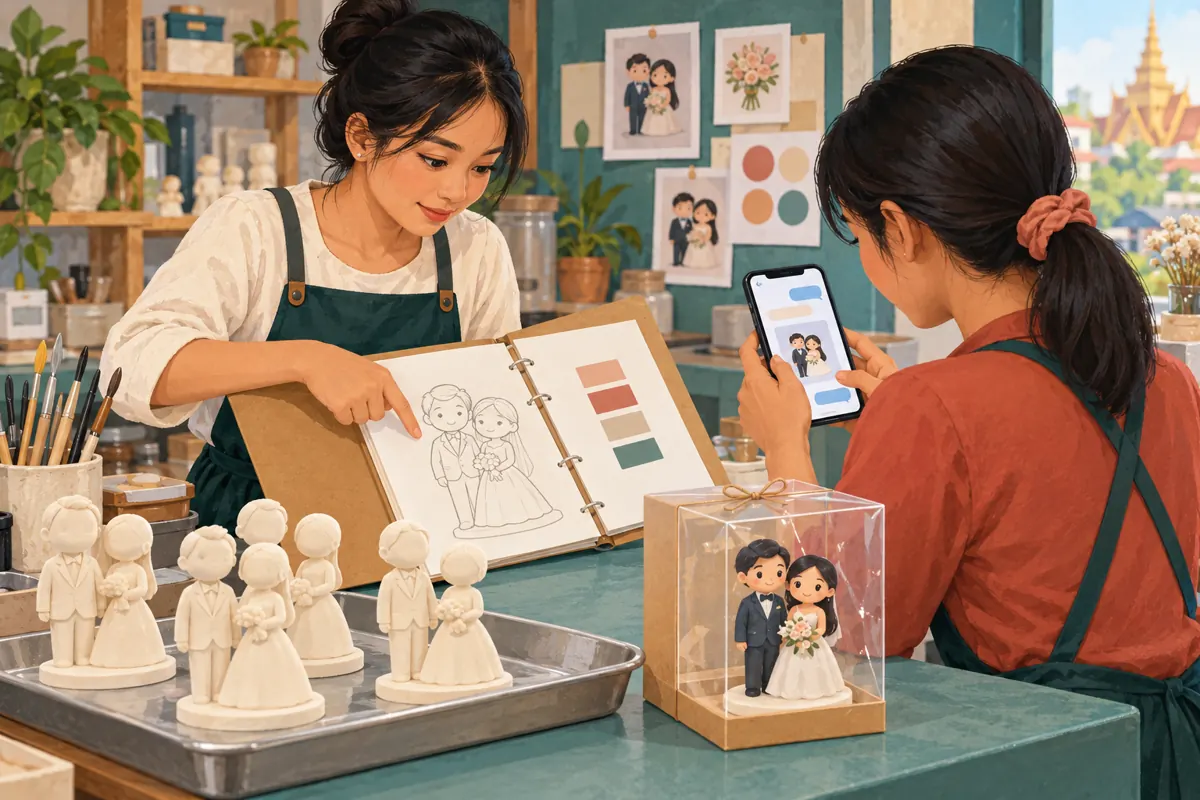
Prepared with AI assistance. Illustrations explain the workflow and do not represent customer results.