20/10/2026 11:08
Will That Offcut Make a Pouch? A TikTok Stitch Workflow for Cambodian Fabric Shops
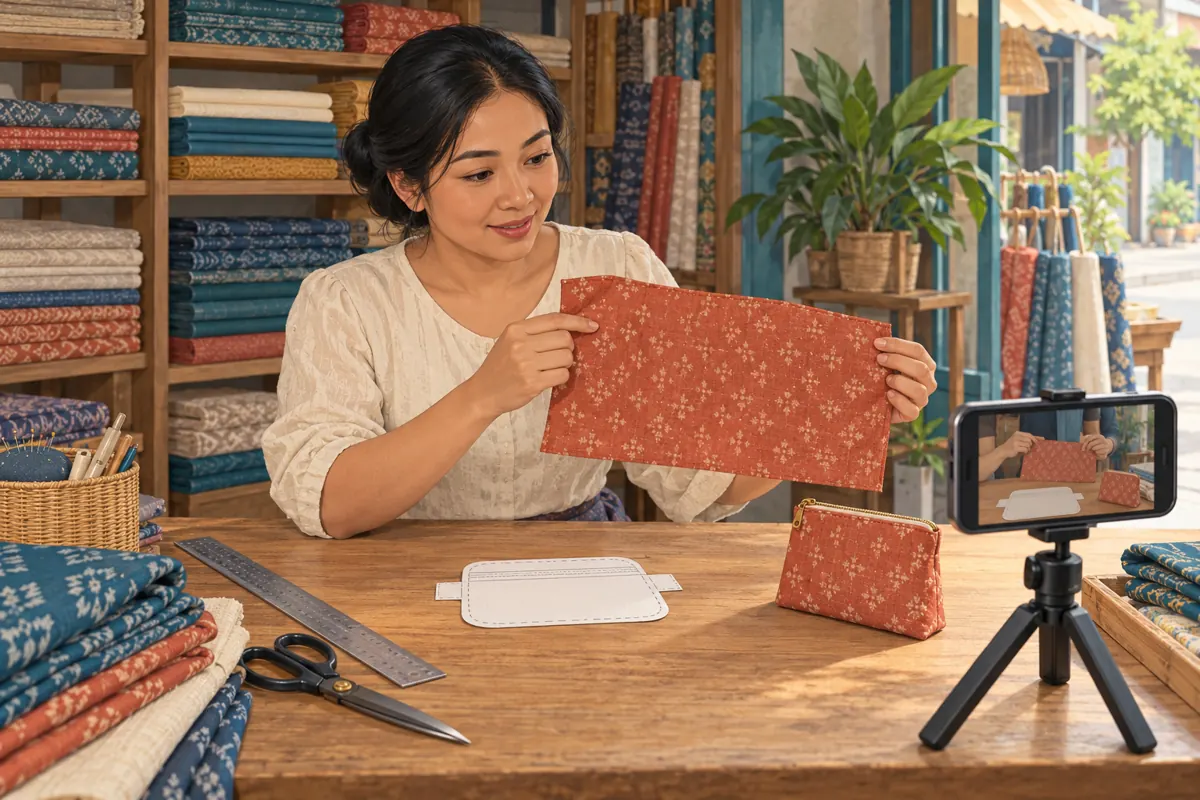
A short video of a finished pouch can make a fabric remnant look like an obvious purchase. What the viewer cannot see is whether that remnant accommodates every pattern piece, whether the print faces the right direction, or whether lining comes separately. For a Cambodian fabric shop, answering those questions can make social promotion more useful. TikTok Stitch offers a way to introduce an existing video excerpt and then add a practical response. This workflow follows a hypothetical Phnom Penh shop answering one question: could a particular offcut work for a pouch project? It connects the demonstration to informed enquiries and explains why an SMM service label cannot establish product suitability or genuine demand.
1. Choose a question the camera can resolve
Start with a narrow question rather than a broad promise about turning scraps into products. In this hypothetical example, a sewing creator shows a small zipped pouch, and the shop wants to explain how to check a remnant before buying. The response concerns fabric layout. It does not claim to reproduce the creator’s complete pattern, construction method, or finished result.
Write the intended answer before selecting the source excerpt: this piece can accommodate the demonstrated outer panels when arranged as shown, while lining and other components need separate checks. If staff cannot verify that sentence on the table, narrow it further. A useful demonstration might simply explain why one piece is too narrow. Showing a limitation gives shoppers a concrete buying criterion and gives the shop a focused filming task.
2. Decide whether Stitch adds necessary context
TikTok describes Stitch as combining part of an existing TikTok video with a video you create. Use it when the selected excerpt helps viewers understand the exact question your response addresses. If the shop is explaining a general measuring principle, an original standalone demonstration may communicate the idea more directly.
Watch the complete source video before choosing an excerpt. A creator might mention elsewhere that the pouch uses lining, interfacing, or several separate pieces. Removing that context can make a careful tutorial appear to promise something it never promised. Keep a reference to the original post and note which point the shop is answering.
Treat technical availability and editorial permission as separate checks. For a commercial response, clarify intended use with the creator when appropriate, especially if the clip contains someone else’s design, customer footage, or music. Do not imply a partnership or endorsement merely because Stitch is available.
3. Prepare a real pattern-fit test
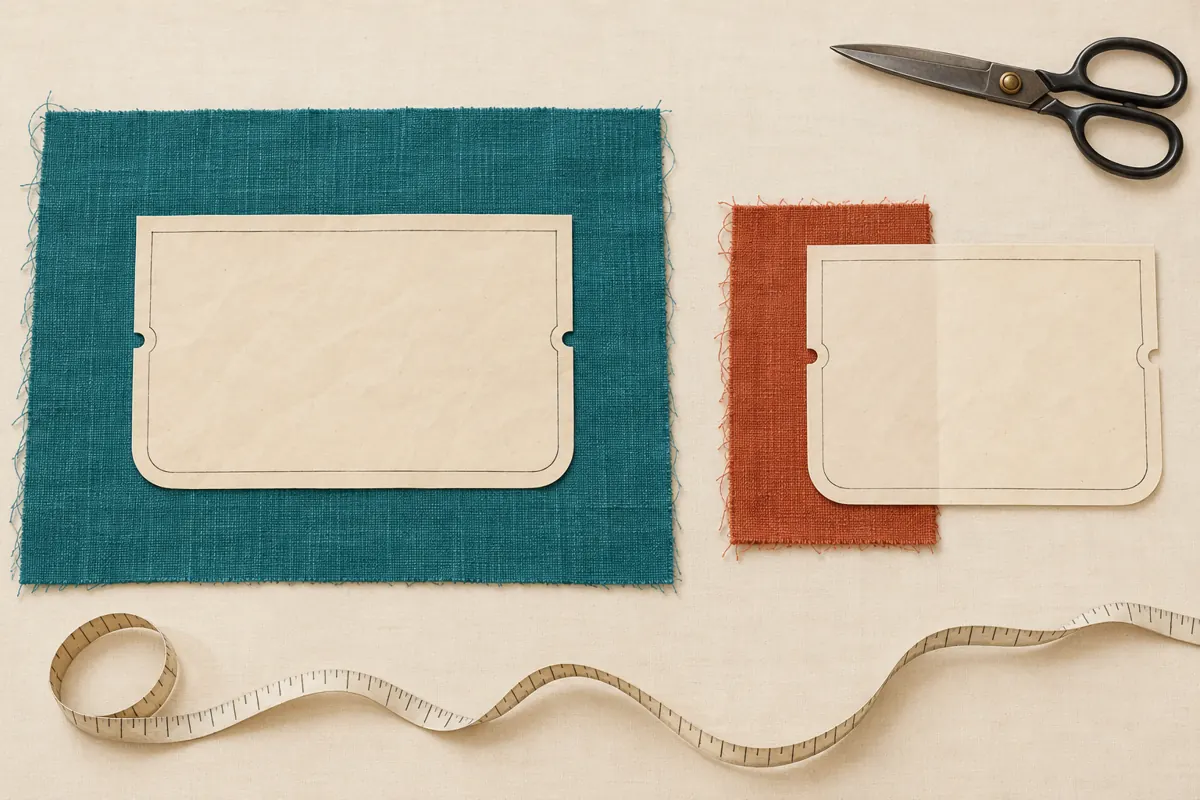
Before recording, lay out the complete set of paper pieces required for the part of the project being discussed. Use a shop-created sample pattern or one you have permission to demonstrate. Confirm whether its cutting outlines already include seam allowance. Explain that distinction in the demonstration so a viewer does not add allowance twice or omit it entirely.
Inspect the usable fabric area, excluding damaged edges or defects that would fall inside a cut piece. Check the number of pieces, their orientation, any required folds, and whether the fabric’s directional print changes the layout. A panel fitting once does not establish that the entire pouch fits.
Prepare a second, visibly unsuitable remnant. Place the same paper piece on both fabrics without changing the camera scale. This makes the decision easy to understand: the cutting outline stays within one usable area but extends beyond the other. The comparison illustrates a method, not a universal pouch-size formula.
4. Record the response in a clear sequence
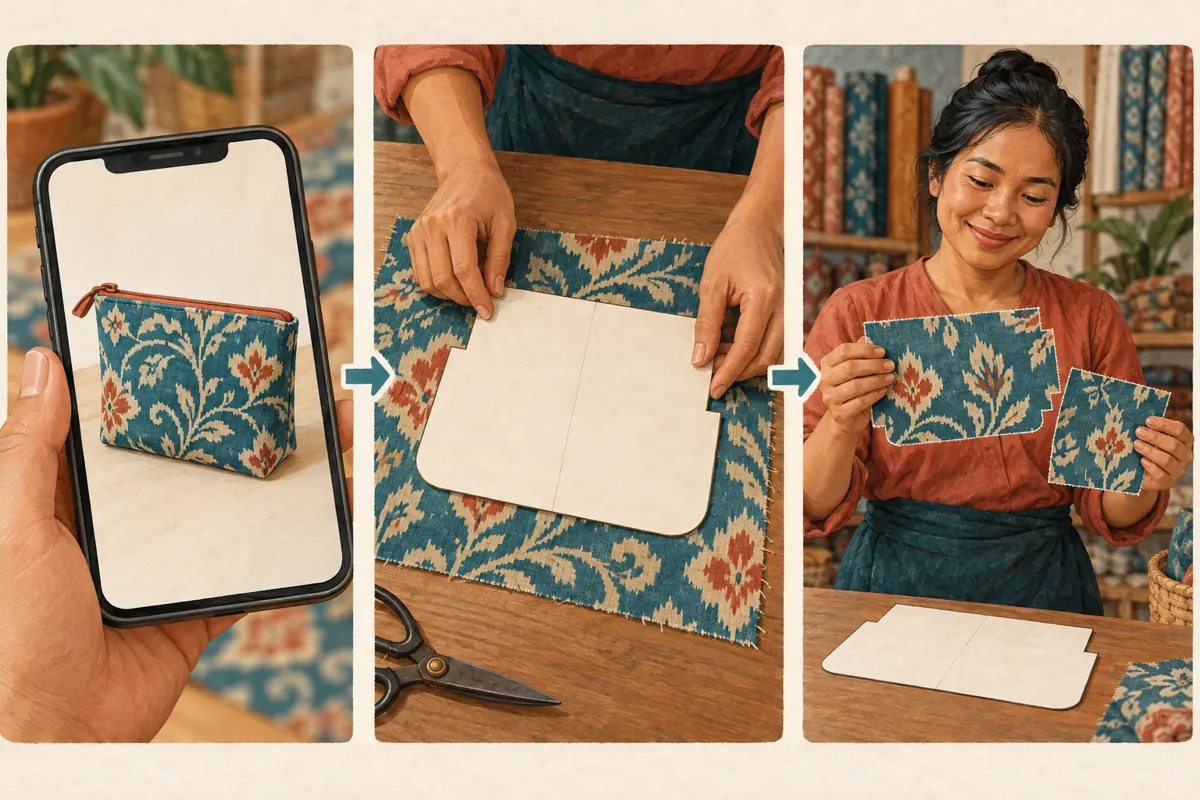
Use three beats: identify the question, demonstrate the check, and explain the boundary of the answer. After the source excerpt, show the whole remnant before moving closer. Lay the pattern down slowly, hold it still, and point to the limiting edge. Keep the fabric flat rather than stretching it to make the paper appear to fit.
For a hypothetical script, the shopkeeper could say: this is our sample outer-panel layout; these outlines include the allowance used in this sample; this smaller piece does not contain the full cutting shape. Then show the remaining required pieces or state plainly that they are outside the demonstration.
Record in the language the intended shoppers understand. For a Khmer-speaking audience, explain sewing terms naturally in Khmer and check any written measurements separately. Keep the ruler, paper edge, and fabric boundary visible together. Hands, price stickers, or decorative props should not cover the evidence.
5. Build and review the Stitch in TikTok
TikTok’s documented process starts at the source video’s Share button. Choose Stitch, select the excerpt, and tap Next. Select the recording length, record the response, and continue to editing. Review the description and relevant settings before saving a draft or posting. Not every video has Stitch enabled.
Watch the entire assembled video, including the transition. Check that the selected excerpt still represents the creator’s meaning and that the shop’s first sentence makes sense immediately afterward. Remove any wording that sounds like a guarantee about unseen fabric or an unfamiliar pattern.
Have another staff member identify exactly what has been demonstrated. If they conclude that every remnant in the shop will work, the explanation needs tightening. For a post promoting the shop’s products or business, TikTok’s Community Guidelines require use of its content disclosure setting. Include that check in the final review.
6. Make the enquiry prompt useful at the counter
Close with a request that helps staff answer the next question. Instead of asking viewers to comment a meaningless symbol, invite them to identify the remnant and explain which project they are considering. A useful prompt asks for the usable width and length, the required number of panels, and whether the pattern includes seam allowance.
For a hypothetical shop caption, explain that the video demonstrates one sample layout and that viewers should confirm current fabric availability before travelling. Mention whether the displayed lining, zip, or finished pouch is included, sold separately, or shown only as a reference. Avoid turning a sample into an implied bundle.
Prepare the counter team before promotion begins. Give them the sample pattern, the remnant reference, and the limits stated in the video. If someone arrives with a different pattern, staff should assess that pattern rather than repeat the video’s answer automatically.
7. Choose how others may reuse the response
TikTok’s Stitch privacy guidance places account controls under Profile, Menu, Settings and privacy, Privacy, then Reuse of content. The documented audience choices include Everyone and Friends, meaning followers you follow back. A public account is required for others to Stitch its videos. Individual posts also have an Allow reuse of content control.
The setting has broader effects than Stitch alone: TikTok says turning it off also affects Duets, stickers, and adding the post to Stories. Decide whether the shop is comfortable with the demonstration travelling in those formats. Avoid showing customer paperwork or private messages anywhere in the frame.
Do not confuse restricting future reuse with removing existing associated posts. TikTok warns that Remove all posts in reuse history permanently removes the original and associated Duet and Stitch videos. Read the confirmation carefully before using that control.
8. Apply a service-fit check before any panel spending
An SMM panel catalogue should not determine the sewing question or the shop’s definition of success. The supplied santrix-smm.com catalogue includes the exact service name “TikTok Random Comments | Arabic 🇸🇦 | Instant Start”. Its label describes a random-comment offering with Arabic wording; the supplied description is empty. That is insufficient evidence to verify delivery timing, participant identity, geographic origin, or relevance to Cambodian shoppers.
For this workflow, random comments do not establish that someone understood the layout or wants suitable fabric. Purchased engagement is not evidence of genuine interest, sales, ad delivery, or Cambodian users. TikTok’s guidelines prohibit services that artificially boost engagement or manipulate its recommendation system, so artificial-engagement purchasing should not form part of this plan.
The practical decision is to leave an unsuitable service unordered. Put the available effort into a clearer demonstration, accurate stock information, and staff replies. A catalogue entry is an option to evaluate, not a requirement to buy.
9. Review questions for evidence of understanding
After publication, keep a short enquiry log focused on unresolved decisions. Useful entries might concern whether a pattern requires two matching panels, whether lining is included, or whether the demonstrated remnant remains available. Record the question and the answer given without copying unnecessary personal information.
In a hypothetical review, several people might ask whether they can rotate a striped fabric to fit the pattern. That suggests the demonstration should explain orientation more clearly. It does not establish demand for a particular print. Likewise, a message requesting a stock check is an enquiry, while a confirmed purchase belongs in the shop’s sales records.
Keep observation separate from interpretation. A sensible note says that a viewer asked about panel quantity and received a layout explanation. It should not say that the Stitch caused a sale unless the shop has evidence supporting that connection. Decide the next video from the unanswered question.
10. Correct the mistakes that weaken the demonstration
The most consequential mistake is showing one attractive cut piece while implying that all project components fit. Correct it by displaying the complete relevant layout or narrowing the claim to the piece actually tested. Another mistake is mixing finished dimensions with cutting dimensions. State which measurement is being discussed before showing the ruler.
Avoid presenting a stretched, folded, or partly concealed remnant as a flat usable rectangle. Do not rotate a directional pattern solely to produce a pleasing fit without discussing the changed appearance. If the shop substitutes different cloth during recording, explain the substitution instead of allowing viewers to assume it is the same stock.
Finally, separate the educational example from availability. A useful demonstration may remain online after a unique remnant sells. Give staff a consistent answer: the method still applies, but any replacement piece needs its own check. Update the available product information without promising an identical substitute.
Frequently asked questions
What should the shop do if Stitch is unavailable on the source video?
Do not download and reupload the clip simply to bypass the missing option. Ask the creator about an appropriate way to respond, or film an original explanation using the shop’s own materials. The fabric-fit question can still be answered without reproducing the source footage.
Does a paper pattern fitting on the cloth prove that the whole pouch can be made?
No. It establishes only the fit shown. The project may require additional panels, lining, interfacing, fasteners, or a particular fabric orientation. Check the full cutting requirements and material suitability before telling a shopper that a remnant is sufficient.
Should staff quote a price when someone sends only a pouch photograph?
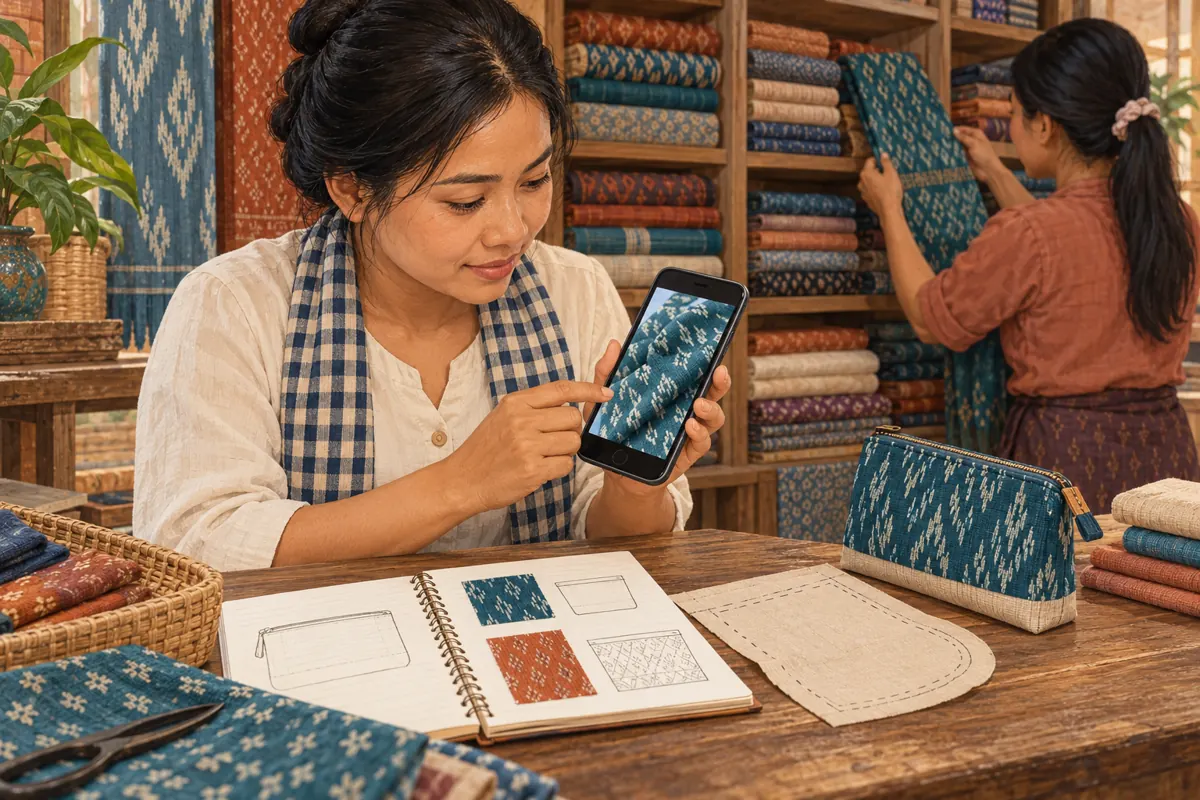
First clarify whether the person wants fabric, a materials bundle, or a finished item. A photograph alone does not establish cutting dimensions or construction requirements. Ask for the pattern requirements or offer an in-person assessment before treating the enquiry as a defined order.
Can a popular Stitch prove that Cambodian customers want the demonstrated fabric?
No. Visible engagement does not establish location, buying intent, or stock demand. Look for specific questions about usable dimensions, availability, and collection arrangements, then keep those enquiries distinct from confirmed orders. Purchased reactions or comments cannot fill that evidence gap.
How should the shop respond when the demonstrated remnant has sold?
Explain that the video shows a measuring method and that the particular piece is unavailable. Offer to check another remnant against the customer’s requirements. Do not call the replacement equivalent until its size, condition, orientation, and relevant material characteristics have been assessed.
Explore the current service catalogue, create an account, or ask a specific question through support tickets.
- TikTok Help Center: Stitch
- TikTok Help Center: Stitch privacy settings
- TikTok Community Guidelines: Overview
Prepared with AI assistance. Illustrations explain the workflow and do not represent customer results.