22/10/2026 13:24
Edit the Demo or Publish It? YouTube Access for Cambodian Awning Shops

Hiring someone to edit an awning demonstration can create an unexpected question: should that person also be able to publish for the shop? A good video editor may understand pacing and sound while still needing the owner to confirm installation details, available fabrics and quotation terms. Cambodian businesses using YouTube alongside an SMM panel should settle those responsibilities before handing over work. This guide follows a hypothetical Phnom Penh awning shop preparing a demonstration of a retractable model. The aim is a useful video, a clear approval decision and access that matches the assignment. The example is illustrative, not a customer case study or evidence of marketing results.
1. Describe the job before choosing an access level
Start with a sentence describing the deliverable: prepare a video showing how the displayed awning opens, folds and changes the shaded area. Then name the person responsible for each decision. The installer verifies the mechanism, the editor assembles the footage, and the owner approves the offer. Assigning all three responsibilities to whoever holds the laptop is convenient until a technical claim or outdated price reaches viewers.
Write down whether the freelancer will deliver a finished file, prepare material inside the channel, or handle publication. These are different assignments. Include the agreed language, the product shown and the deadline for review. For a Cambodian team working with an overseas freelancer, record the deadline in Cambodia time and confirm the corresponding time with the freelancer. A delivery deadline should leave room for corrections before the intended promotion date.
2. Decide whether channel access is necessary at all
A freelancer who only cuts footage can work from supplied video files, a script and product notes. The owner can receive the final export and handle the channel work. This arrangement suits a one-off demonstration when the shop wants to make every publication decision itself. It also makes the handover concrete: the editor owes the shop an agreed set of files rather than an undefined promise to manage YouTube.
Create a small working package containing the approved footage, pronunciation notes, fabric names and a list of claims that require confirmation. Exclude unrelated customer documents. For example, an installation photograph may help explain mounting position, but the customer's address need not appear in the editing package. Ask the editor to flag missing information instead of filling gaps with assumptions. If file delivery meets the assignment, there is no operational reason to add channel access merely because the work concerns YouTube.
3. Match permissions to the actual channel work
YouTube channel permissions let collaborators work without receiving the owner's Google Account login. Editor can upload and publish but cannot manage permissions or delete published content. Editor (Limited) excludes revenue data; it still permits publication. Subtitle Editor handles subtitles on eligible videos. Viewer (Limited) provides viewing access without revenue data. Manager includes permission management and content deletion. These distinctions come from YouTube's channel permissions documentation.
Choose by the actions required, not by the freelancer's job title. Someone called a manager in a contract does not automatically need the platform's Manager role. Before assigning access, ask whether every capability included in that role is acceptable for this assignment. If the shop requires an absolute owner-only release process, use file delivery and owner upload. A written instruction to wait for approval should never be mistaken for a technical barrier that prevents publication.
4. Make the invitation a deliberate handover
In the YouTube Studio app, open your profile picture, then Settings and Permissions. Choose Invite, enter the collaborator's email, select the role and send the invitation. YouTube says invitations expire after 30 days. Its permissions documentation also explains access removal and notes that some delegated actions are unsupported.
Confirm the intended email address directly with the freelancer before sending anything. Record the person's name, assigned work, chosen role and planned review date in the shop's project notes. After acceptance, ask them to confirm the correct channel and agreed task. Do not use a live promotional upload as an access experiment. Start with a clearly identified practice deliverable or a walkthrough of the planned work, and resolve any confusion before the owner becomes unavailable for installation visits.

5. Build a product review that an editor can follow
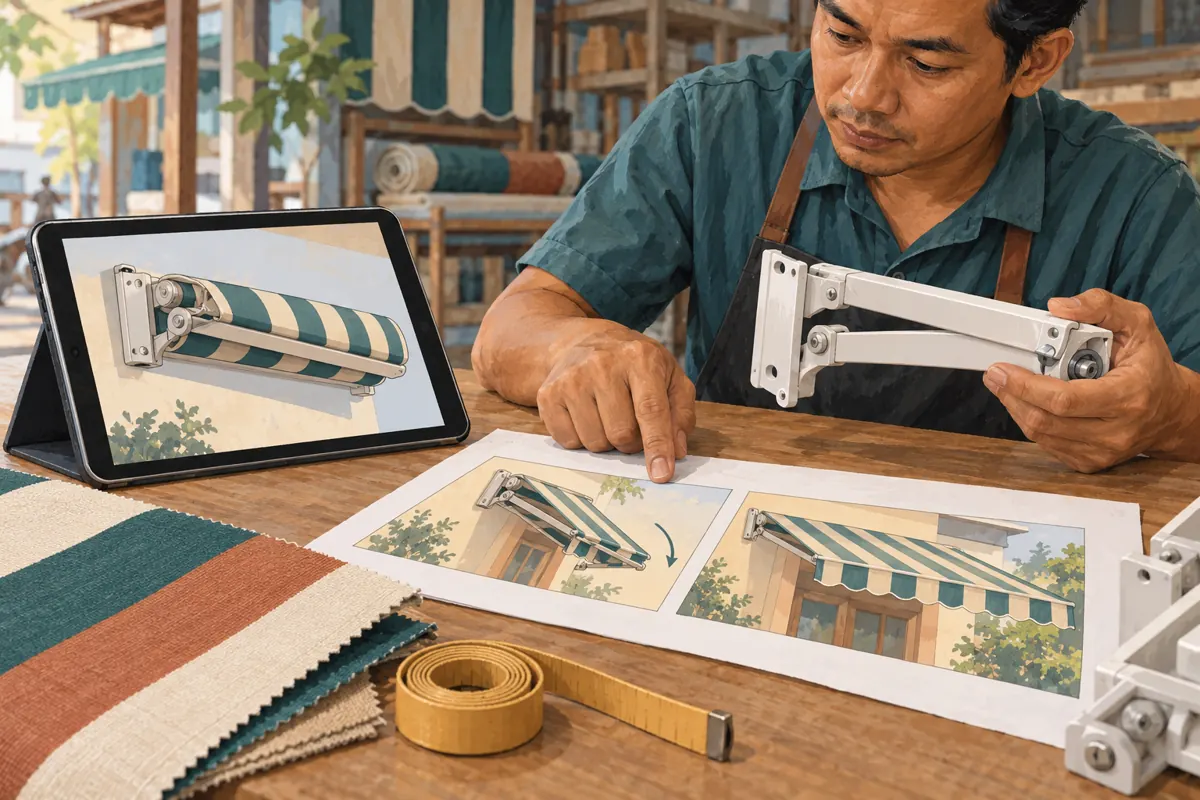
For the hypothetical awning shop, the review should answer concrete buyer questions. Does the video show the same mechanism being offered? Is the fabric merely a display sample or currently available? Does the demonstration explain which measurements the shop needs before quoting? Keep these questions beside the storyboard so the editor can identify missing shots before spending time polishing transitions.
Have a Khmer-speaking reviewer check spoken explanations and any Khmer captions against the installer's intended meaning. Preserve genuine model names where necessary, but explain unfamiliar terms in language customers use. Avoid turning an ordinary opening demonstration into an unsupported promise about storm resistance or suitability for every wall. Where the final installation depends on a site assessment, say so plainly. A visually persuasive edit remains incomplete if viewers cannot distinguish the demonstrated product from the conditions of their own proposed installation.
6. Define exactly what approval covers
Use a version-specific approval note. In the hypothetical project, the owner might write: approved export B, showing the striped demonstration awning, with the revised explanation that installation requires a separate quotation. The note should identify the matching title, thumbnail and description draft. Saying only that the video looks good leaves uncertainty about whether the owner also accepted the commercial wording.
Agree which changes require another review. Replacing background music may call for a rights check; changing a price, included accessory or installation statement requires the owner's attention. A tighter opening edit can also remove a qualification that made the original explanation accurate. Ask the editor to describe meaningful changes in ordinary language. The owner should be able to assess what changed without replaying several near-identical exports and trying to remember which one was approved.
7. Keep an SMM request separate from editorial access
The supplied public catalogue includes the exact listing “YouTube Like ~ Max 5k ~ 5k/days ~ Instant ~ 𝗥𝗘𝗙𝗜𝗟𝗟 30D”. Its name presents a likes-related service, but the brief provides no supporting description. Treat the delivery and refill wording as listing claims, not verified facts. The listing establishes no need for a provider to receive channel access, and it provides no evidence about Cambodian audiences or buyer interest.
YouTube's fake engagement policy prohibits artificially increasing metrics and warns that a hired promoter's actions can affect the channel. Assess the proposed method before considering an order; do not proceed with artificial engagement. Purchased engagement is not evidence of genuine interest, sales, advertising delivery or Cambodian users. Keep editorial work, any service review and actual customer enquiries in separate records. An editor completing a good demonstration does not authorize a promotion purchase, and a panel order does not approve changes to the demonstration.
8. Give the released video a useful promotion route
Once the owner approves publication, build promotion around the question the demonstration answers. A shop could share it when someone asks how a retractable awning folds away, or include it in a relevant product explanation on another business channel. Introduce the footage accurately: it shows a demonstration model, while dimensions and installation conditions still need discussion. Avoid presenting the video as proof that every property can use the same arrangement.
Prepare an enquiry response before distributing the link. Ask interested customers for the opening width, the proposed location and a suitable photograph, using the shop's normal private enquiry process. Tell staff which questions require an installer rather than an immediate quotation. This connects social content to useful work: a clearer initial conversation. Record recurring misunderstandings, such as confusing fabric width with total frame width, as candidates for the next demonstration.
9. Review outcomes without confusing access and performance
Evaluate the assignment first against what the shop commissioned. Was the correct product shown? Did the freelancer deliver the editable materials agreed in the contract? Did the owner receive a clear opportunity to review the commercial details? These questions measure whether the working arrangement succeeded. They do not depend on a rise in a public counter.
Then review genuine enquiries separately. In a hypothetical follow-up, staff might notice that customers still ask whether mounting brackets are included. That observation justifies examining the explanation; it does not prove that the editor, permissions setting or promotion caused a sales problem. Keep a brief note of the question and the wording customers misunderstood. If the shop tests a revised explanation, document the change and compare subsequent conversations cautiously, recognizing that product demand and customer circumstances can also differ.
10. Close the assignment and review ongoing access
Before closing the project, collect the final export, approved thumbnail, caption files where applicable, and any editable project materials included in the agreement. Store a short note identifying the version actually released. Ask the freelancer to list unfinished corrections and any material that the shop should not reuse without further permission. This makes a later seasonal update possible without reconstructing the entire assignment from chat messages.
Review access when the assignment ends or the person's responsibilities change. Through Permissions, the owner can select the collaborator and remove access. Make this a normal project step, alongside confirming file delivery and settling outstanding work. If the relationship continues, document the next assignment and its review date instead of leaving access attached to a vague expectation of future help. For a small shop, a clear ending prevents yesterday's temporary arrangement from becoming tomorrow's unexplained responsibility.

Frequently asked questions
What if the freelancer promises to wait for approval?
Treat that promise as a working agreement, then decide whether the shop is comfortable with the access being granted. Specify what approval looks like and who can give it. If the owner needs to control every release personally, request a finished file and handle the upload internally. Do not choose a broader workflow simply to avoid an extra handover.
Should a Khmer translator receive the same access as the video editor?
Start with the translator's deliverable. Reviewing a script or returning a corrected caption file may require no channel access. Give them the necessary audio, product terminology and context, and identify who checks the final meaning. Separate translation approval from technical product approval: fluent wording can still describe the wrong mechanism or omit an important installation condition.
Does an SMM provider need to become a channel collaborator?
Nothing in the supplied service description data establishes that requirement. Ask what specific task would require access and evaluate it independently. Never interpret a catalogue listing as authorization to invite someone. First determine whether the proposed promotion method is acceptable at all; account access does not make artificial engagement legitimate.
How should the shop handle an urgent correction?
Identify the inaccurate statement and the exact version affected. Have the owner or responsible installer supply the corrected wording, then assign the correction to one person. Tell other collaborators that a revision is underway so they do not distribute outdated material. Record the final resolution and update any prepared customer responses that repeated the error.
What should success look like for a first freelance assignment?
Set acceptance criteria that the team can inspect: an accurate demonstration, understandable language, complete agreed files and a documented release decision. Use genuine customer questions to judge whether the explanation needs improvement. Avoid making the freelancer's acceptance or payment depend on unexplained engagement changes, especially where other promotional activity would make the results difficult to interpret.
Explore the current service catalogue, create an account, or ask a specific question through support tickets.
- YouTube Help: Add or remove access to your YouTube channel with channel permissions
- YouTube Help: Fake engagement policy
Prepared with AI assistance. Illustrations explain the workflow and do not represent customer results.