22/10/2026 10:36
Search Result or Suggested Video? YouTube Traffic Sources for Cambodian Umbrella Shops
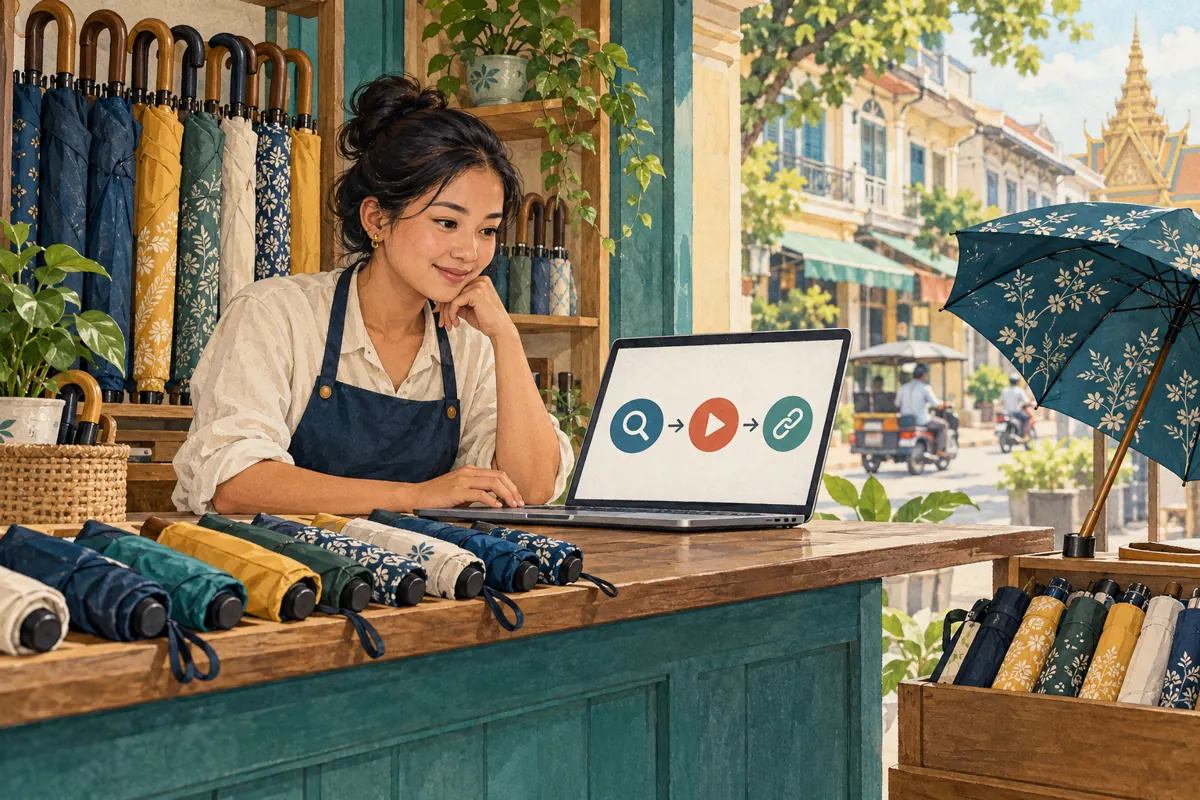
An umbrella demonstration can attract viewers for different reasons. Someone may be looking for a compact model, following a shared link or continuing from another video. For a Cambodian retailer, those routes suggest different improvements to the next demonstration. They do not automatically reveal who wants to buy. This workflow helps you examine one YouTube video, turn discovery clues into a practical filming decision and keep any SMM-panel activity separate from evidence of customer demand. The aim is a clearer answer to a buyer’s question, supported by records you can actually explain.
1. Start with one product question
Choose a demonstration with a specific purpose: showing how an umbrella closes, comparing folded lengths or explaining which sleeve belongs to which model. Avoid starting with the channel’s total views. That total mixes products, publication dates and viewing situations, making it harder to decide what the shop should change. Write the question the selected video was supposed to answer before opening its report.
Consider a hypothetical Phnom Penh umbrella shop whose video shows a compact umbrella opening and closing. Staff want to know whether the next demonstration should explain the closing mechanism or show how the folded umbrella fits inside a shoulder bag. Both are reasonable subjects, but they require different shots. Record the video link, featured model and intended question on a review sheet. Add any known stock changes, because a useful demonstration should not accidentally promote an unavailable colour or a discontinued version.
2. Open the report and define the review window
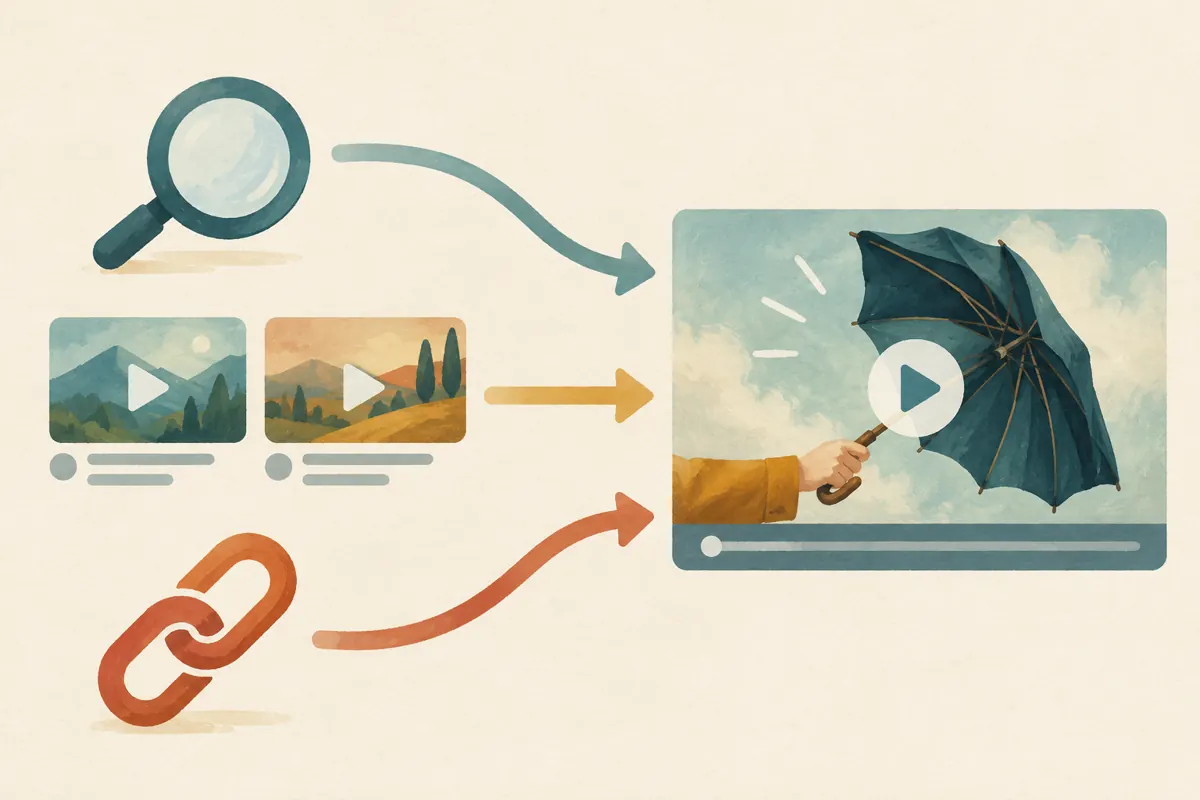
YouTube’s official instructions for desktop are to open YouTube Studio, select Content, choose the video’s Analytics and open Reach. Some reports may be unavailable on mobile. The traffic-source report describes how viewers found the video. YouTube Search covers search results; Suggested videos includes suggestions beside or after videos and links in video descriptions. External sources covers websites and apps that link to or embed the video.
Select a date range and write it down before interpreting anything. A practical first review might cover a complete trading week after publication, with a later review if the evidence is thin. This is an editorial routine, not a platform requirement. Record when staff shared the video, changed its title or ran an advertisement. These events help explain the circumstances of viewing. If comparing two demonstrations, use comparable periods after publication and note important differences instead of treating the comparison as a controlled experiment.
3. Translate discovery routes into questions to investigate
The source label is a starting point for investigation. For a search-led visit, ask whether the demonstration answers the likely query quickly. For a visit from another video, ask what information a viewer might already have and what remains unexplained. For an external visit, review the message that accompanied your own shared link. A promise in that message may shape expectations before the viewer presses play.
In the hypothetical shop, a staff member might share the opening demonstration with the message, “See whether this model fits your work bag.” The video actually shows only the canopy opening. That mismatch is something the business can fix regardless of its traffic totals. Change the sharing message to describe the existing demonstration accurately, then film a separate folded-size comparison. Do not assume every external viewer saw that particular message: retain the known sharing activity as context, not proof of the origin of every visit.
4. Read search phrases without inventing an audience
The YouTube search-terms report lists phrases viewers used when finding the content. Copy relevant phrases exactly into the review sheet, then place your interpretation in a separate column. For Cambodian businesses, preserve Khmer wording when it appears. If a phrase needs translation for a colleague, keep the original alongside the translation. An English product term does not establish that the viewer is foreign, and Khmer wording alone does not establish a delivery location.
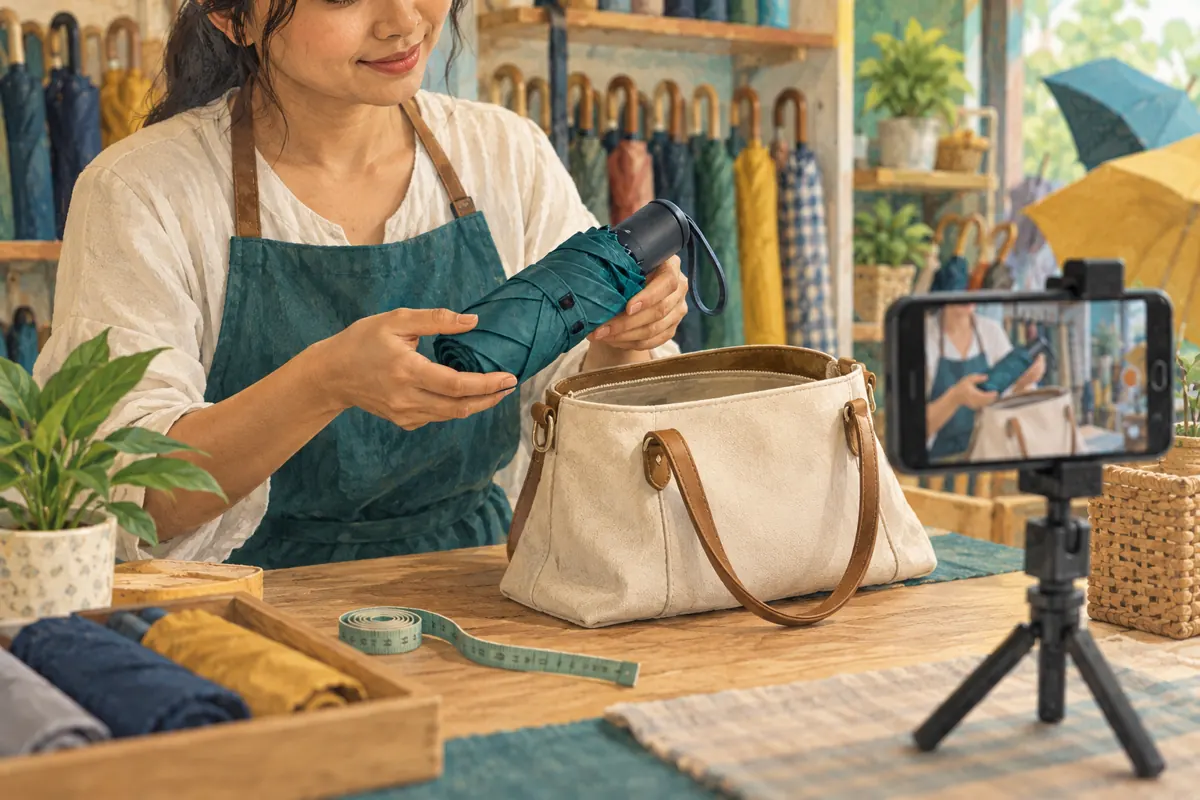
Suppose, hypothetically, a phrase concerns a small folding umbrella. The observation is that this phrase appears in the report. The interpretation is that portability may deserve clearer treatment. The proposed action is to show the actual folded product beside a measured bag opening. These are three different statements. Avoid jumping from the phrase to “Cambodian office workers prefer this model.” That would add occupation, geography and preference that the phrase does not establish. Confirm practical needs through actual customer conversations.
5. Treat missing details as unknown
YouTube explains that search terms and external URLs can be limited, including low-traffic terms that do not appear individually. Privacy or system limitations can also affect reports. Consequently, visible rows may not add up to a displayed total. Record missing information as unavailable rather than filling the gap with a guess about Telegram, Facebook or a particular customer group.
If the report is too sparse, YouTube suggests trying a longer period or removing filters. For the shop’s review, that means broadening the view carefully while preserving the original dates in your notes. Do not repeatedly change the period until a preferred story appears. A longer window can include different stock, weather or sharing activity, so document those changes. When the evidence still does not support a decision, choose the next demonstration from a recurring counter question and label that as the basis. Analytics is useful evidence, but it need not decide every filming task.
6. Choose one useful filming change
Use a simple decision process. First, identify an unanswered product question. Next, check whether the shop has the correct item and reliable information to answer it. Then choose a visible demonstration that resolves the uncertainty. If the question is folded size, show the umbrella fully closed, identify the model and measure it clearly. If the question is operation, show the complete sequence without cutting away during the difficult movement.
For the hypothetical bag-fit demonstration, use the actual umbrella and a clearly identified sample bag. Explain that fit depends on the buyer’s bag opening and available space. A single successful fit does not prove compatibility with every shoulder bag. Ask a Khmer-speaking colleague to check the spoken explanation and measurement units before release. The follow-up should be understandable to a viewer who never watched the original video. Give it its own clear introduction rather than spending the opening on an unexplained reference to last week’s upload.
7. Match promotion to the answer the video provides
Prepare a short sharing message that states exactly what the new demonstration shows. For example, a hypothetical message could explain that the clip compares the folded umbrella with one sample bag and shows where to measure. Keep current availability and collection arrangements in information the shop can maintain. Do not add claims about storm resistance, durability or automatic operation unless the product information and demonstration support them.
Select places where sharing is relevant and permitted, such as the shop’s own social channel or a conversation in which someone requested sizing help. Give staff the same approved link and wording. This reduces the chance that one colleague promotes a size guide while another describes it as a waterproofing test. If a viewer asks about a different model, answer that distinction directly. A useful promotional exchange can reveal a missing explanation even when it does not lead immediately to an order.
8. Review SMM services against the actual objective
The supplied santrix-smm.com catalogue includes the exact title “YouTube Like ~ Max 100k ~ 50k/days ~ Instant ~ 𝐍𝐎 𝗥𝗘𝗙𝗜𝗟𝗟”. Its category concerns YouTube likes, but the supplied description is empty. The title’s speed, quantity and refill wording should not be treated as independently verified performance. Nothing in that information establishes Cambodian audience targeting, product interest or delivery through official YouTube advertising.
A likes-related listing does not answer the shop’s question about what viewers need explained. Purchased engagement is not evidence of genuine interest, sales, ad delivery or Cambodian users. YouTube prohibits artificial inflation of engagement, and hiring another party does not remove the channel’s responsibility for prohibited methods. Reject services that depend on artificial engagement. If previous panel activity exists, record its timing separately so colleagues do not credit a visible count change to the new demonstration. No panel purchase is required to carry out this workflow.
9. Connect viewing clues with real enquiries carefully
Keep three short records: discovery observations, customer questions and completed business transactions. Each answers a different question. The first helps explain how content was encountered. The second reveals what a person still needs to know. The third establishes what the shop actually supplied. A customer asking whether an umbrella fits a bag has expressed a specific uncertainty; that enquiry is not yet a confirmed purchase.
When appropriate, ask customers which demonstration they mean, or invite them to send its link. Record only the details needed to resolve the enquiry. Do not copy private conversations into a public marketing report. If someone voluntarily says they found the shop through the sizing video, record that as a self-reported source. Avoid assigning every sale during the review period to YouTube. Walk-in visibility, repeat business, personal recommendations and other promotion may also contribute. Where the source is unknown, leave it unknown.
10. Close the review with a decision and a limit
At the next review, write one observation, one practical conclusion and one limitation. A hypothetical entry might say that customers continued asking for folded dimensions after watching the opening demonstration; therefore, staff will share the new measurement guide when responding; the shop cannot identify the source of every enquiry. This is more useful than declaring the campaign successful because one public counter increased.
Common mistakes include comparing different date ranges, assuming every suggested-video visit was an algorithmic endorsement, translating a query into an unsupported audience profile and changing several things before keeping a baseline. Another mistake is treating an SMM service record as proof of advertising delivery. Finish by assigning one person to maintain the product explanation and one date to review remaining questions. Keep the original demonstration if it still answers its intended question accurately. Create a replacement or correction when the product information itself has changed.

Frequently asked questions
Does a YouTube Search visit mean the person wants to buy an umbrella?
No. A search can concern operation, repairs, comparisons or general curiosity. Treat a relevant phrase as a clue about information needs. Buying intent requires stronger evidence, such as a person asking about the particular model, availability or collection arrangements. Even that enquiry is separate from a completed sale.
Should the shop make videos only for its largest traffic source?
No. The largest source may bring broad viewing while a smaller group raises useful product questions. Choose a demonstration that resolves a meaningful uncertainty and fits the shop’s stock and ability to explain it. Keep the traffic report as context rather than letting one source determine the entire content plan.
Can we assume external visits came from our Telegram post?
Only record what the available evidence supports. A known Telegram share establishes that your team distributed the link there; it does not identify every external visit. Keep the share date and wording, inspect available referral details and preserve uncertainty where the report does not establish a connection.
What should a new shop do when there is very little analytics data?
Start with a question customers actually ask at the counter or in messages. Film a precise answer, use an accurate sharing message and keep a consistent review record. You can improve an unclear explanation without waiting for a large audience. Avoid manufacturing engagement to make the report appear more informative.
How should earlier SMM-panel activity appear in the review?
Record the service reference, target video and relevant dates in a separate activity note. Do not label purchased engagement as Cambodian demand or official advertising. If the activity makes a comparison difficult to interpret, say so. Base the next practical decision on verified product information and genuine questions.
Explore the current service catalogue, create an account, or ask a specific question through support tickets.
- YouTube Help: Understand your YouTube video reach
- YouTube Help: Understand limited data in YouTube Analytics
- YouTube Help: Fake engagement policy
Prepared with AI assistance. Illustrations explain the workflow and do not represent customer results.